Key Factors to Consider When Choosing a SaaS Development Company
A SaaS development company should be evaluated as a product-engineering partner, not as a temporary source of coding capacity. When assessing SaaS Development Services, look for evidence of product discovery, architecture expertise, multi-tenant security, delivery discipline, cost transparency, ownership, and post-launch support.
Start with business outcomes and constraints; give every shortlisted company the same brief.
Validate shipped work, the actual proposed team, architecture reasoning, and client references.
Require clear answers on tenant isolation, identity and permissions, backups, monitoring, release safety, and incident response.
Compare total delivery assumptions and lifecycle costs, not just hourly rates or the initial estimate.
Put source-code ownership, cloud-account control, documentation, acceptance criteria, and exit assistance in writing.
SaaS Development Company Evaluation: Key Factors at a Glance
Decision Area | Evidence to Request | Warning Sign |
|---|---|---|
Product fit | Relevant shipped SaaS product; defined role and scope | Only mock-ups or vague portfolio claims |
Engineering | Architecture options, trade-offs, testing approach | One-size-fits-all stack or premature microservices |
Security | Threat model, access controls, security testing plan | Compliance logos without scope or evidence |
Delivery | Milestones, demos, risks, change-control process | No named team or unclear acceptance criteria |
Commercials | Assumptions, exclusions, change rates, support terms | Low headline price with major work excluded |
Ownership | IP terms, repository access, cloud ownership, exit plan | Vendor-controlled accounts or unclear rights |
Define Your SaaS Product Goals Before Choosing a Development Company
A useful brief describes the business problem, target users, essential workflows, constraints, and measurable outcomes. It should not attempt to prescribe every screen or technical decision before discovery. A partner should challenge unclear assumptions and identify the smallest release that can validate the product proposition.
Include the user roles, expected usage patterns, sensitive data, required integrations, launch constraints, geographic needs, and what must be true at launch. Separate must-haves from later releases. Ask each vendor to state assumptions and unresolved questions rather than silently filling gaps.
Ready to Build Your SaaS Product?

Evaluate the SaaS Engineering Expertise of the Development Company
SaaS has recurring operational responsibilities that ordinary application delivery can overlook: tenant isolation, subscription lifecycle, role and permission management, onboarding, migrations, observability, safe releases, and support. Ask vendors to explain how they have approached comparable problems and what they would do differently for your constraints.
Multi-Tenant Architecture and Data Isolation
The right tenancy model depends on isolation requirements, customer contracts, scale, operational maturity, and cost. Shared tables with tenant identifiers can be economical, but every query, cache key, background job, file path, and authorization check must preserve tenant boundaries. Separate schemas or databases can strengthen isolation in some cases, while increasing provisioning, migration, backup, and operational complexity.
Ask the team to walk through a request from authentication to tenant resolution, authorization, data access, and audit logging. Request negative tests showing that one tenant cannot access another tenant’s records.
Choosing the Right Architecture for Your SaaS Product
A modular monolith can be a sensible starting point when the team is small, and the product boundaries are still evolving. Independently deployed services may be justified when separate domains need independent scaling, deployment, or ownership, but they add distributed tracing, network failure, versioning, and operational overhead. Ask for a decision record that explains the selected option and the conditions that would trigger a change.
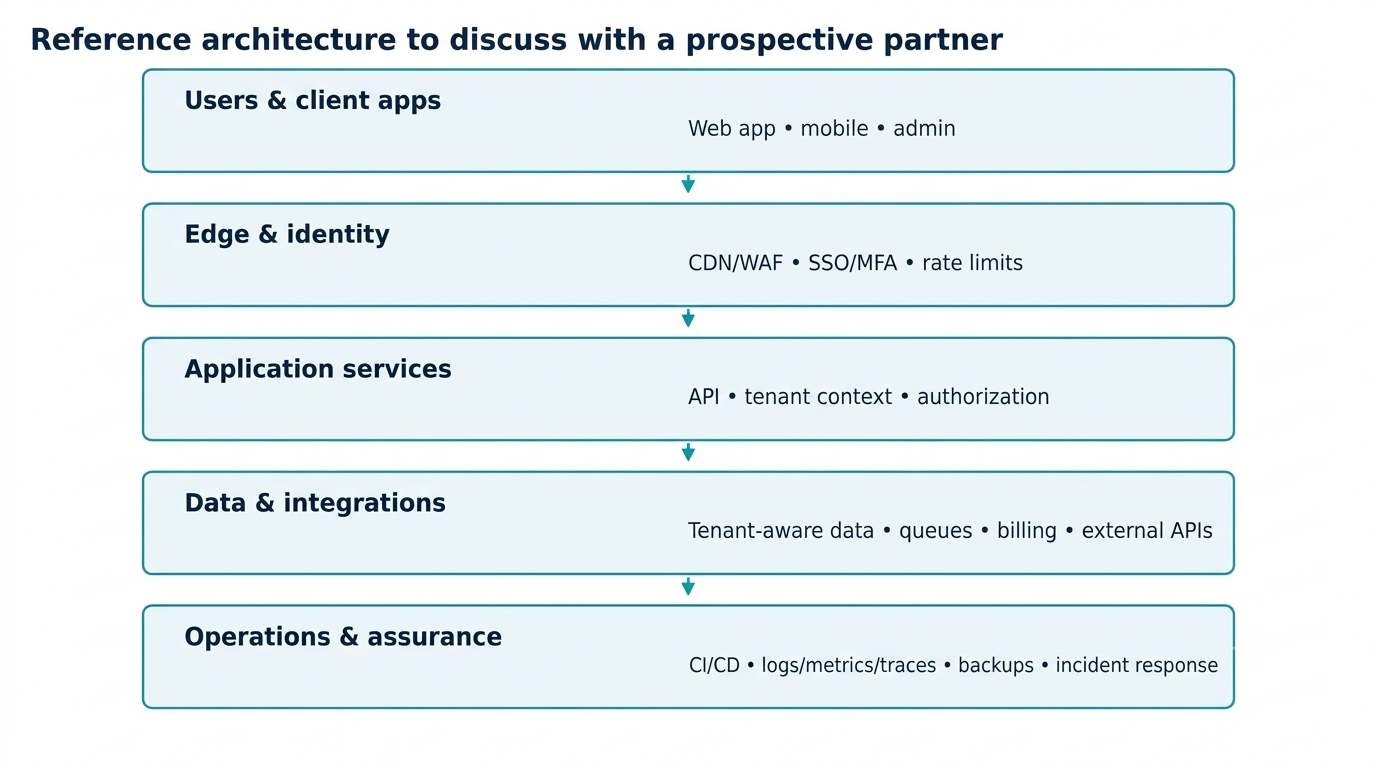
Figure 1. Illustrative reference architecture for discussion during vendor evaluation. This is a conceptual example, not a deployed architecture.
A credible partner should also discuss database migration strategy, API versioning, queues and retry behavior, secrets management, infrastructure as code, environment separation, and disaster recovery. The aim is not to collect a long technology list; it is to see whether the vendor understands the consequences of its choices.
Evaluate SaaS Development Companies With an Evidence-Based Scorecard
A weighted scorecard makes trade-offs explicit and reduces the influence of sales chemistry, company size, or the lowest quote. The weights below are an illustrative starting point, not an industry benchmark. Adjust them to your risk profile and document evidence beside each score.
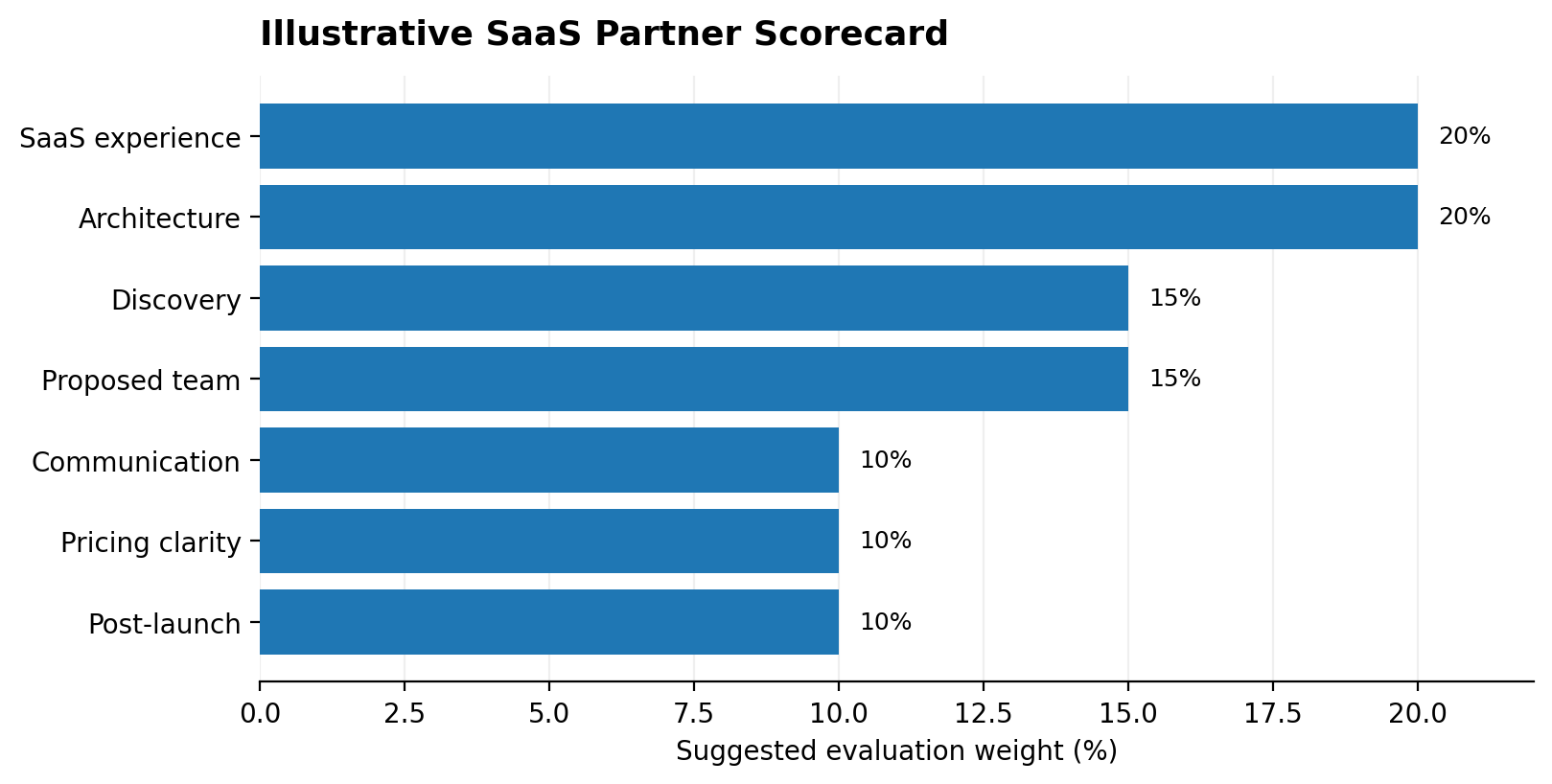
Criterion | Suggested Weight | Evidence That Earns a Strong Score |
|---|---|---|
Relevant SaaS experience | 20% | Comparable product, role, constraints, references, and lessons learned |
Technical and architecture expertise | 20% | Clear trade-offs, tenant model, integration and reliability plan |
Discovery quality | 15% | Useful questions, assumptions, MVP prioritization, and risk discovery |
Proposed team | 15% | Named delivery lead and access to the people who will do the work |
Communication and transparency | 10% | Regular demos, decision logs, visible risks, and escalation path |
Pricing clarity | 10% | Scope assumptions, exclusions, change control, and lifecycle costs |
Post-launch support | 10% | Monitoring, incident handling, maintenance, and handover |
Score each category from 1 to 5 and calculate weighted points as (score ÷ 5) × weight. Do not let a high overall score hide a critical failure: unclear IP ownership, unacceptable security posture, or inability to demonstrate relevant work can be a disqualifier regardless of total.
Ready to Build Your SaaS Product?
Follow a Structured Process to Select a SaaS Development Company
A structured process helps teams compare vendors on equivalent evidence and exposes gaps before a contract is signed.
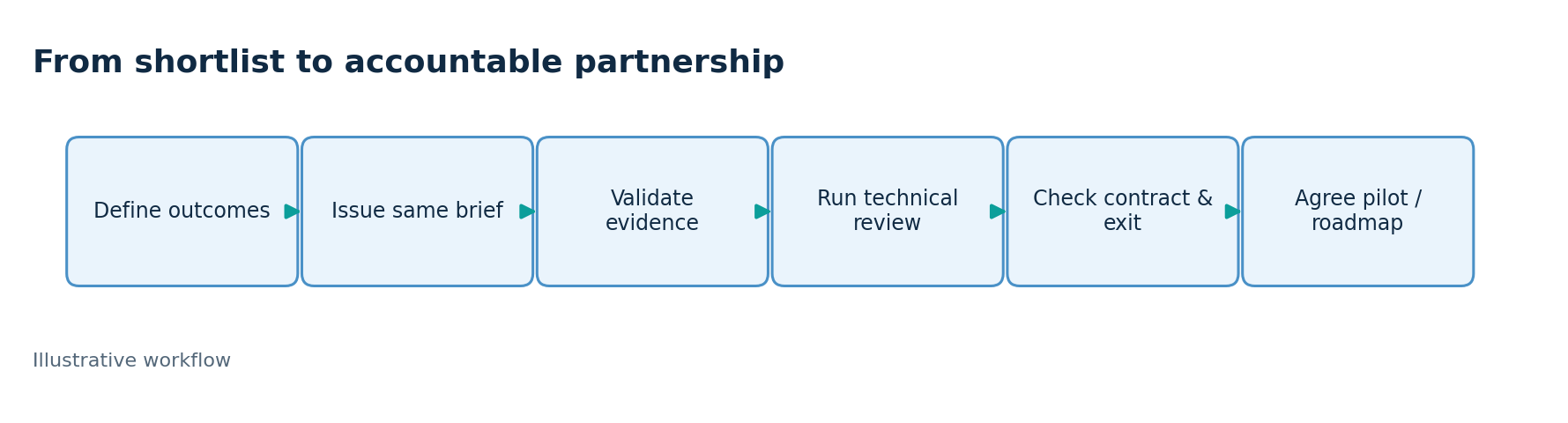
Define outcomes, constraints, non-negotiable security and compliance requirements, and a realistic first-release boundary.
Create a shortlist based on relevant product experience and the ability to work within your delivery model.
Issue the same brief and request proposals that separate confirmed scope, assumptions, exclusions, dependencies, and options.
Run a technical workshop with the proposed engineers, not only sales representatives. Explore tenancy, integrations, failure cases, and maintainability.
Check references and inspect a live product or approved demonstration where possible. Confirm what the vendor actually delivered.
Review contract terms, IP, repository and cloud access, acceptance, support, and exit obligations before approval.
Where appropriate, use a paid discovery phase or limited pilot with defined deliverables and decision gates.
Essential Questions to Ask a SaaS Development Company
Ask the Vendor | A Strong Answer Should Include |
|---|---|
How will tenant isolation be enforced? | Threat boundaries, tenant context, authorization checks, test cases, and auditability |
How do you release safely? | Automated tests, CI/CD, staged rollout or rollback, environment controls |
What happens when an integration fails? | Timeouts, retries with limits, idempotency, dead-letter handling, reconciliation |
How will we know the service is unhealthy? | Service-level indicators, actionable alerts, logs, metrics, traces, ownership |
How are backups and recovery verified? | Defined RPO/RTO targets, restore tests, and named responsibilities |
Who owns the code and infrastructure? | Client-controlled repository/cloud accounts, written IP terms, documented access |
What is excluded from the estimate? | Assumptions, third-party fees, QA, DevOps, migration, training, and support |
What happens after launch? | Warranty, maintenance scope, incident response, service hours, and handover |
Ask for artifacts where possible: a sample architecture decision record, test strategy, deployment checklist, anonymized delivery plan, or support runbook. These reveal more than a generic promise to follow agile practices.
Ready to Build Your SaaS Product?
Evaluate SaaS Security and Compliance Practices
Security expectations should be agreed during discovery and translated into acceptance criteria.
Ask how the vendor handles:
Authentication, MFA where appropriate, and authorization
Secrets management and dependency updates
Secure code review and vulnerability management
Data retention and audit logs
Incident response
OWASP’s Application Security Verification Standard (ASVS) provides a structured set of requirements for verifying web application security and can be referenced during procurement. Version 5.0.0 was published on 30 May 2025. Use the standard to define the verification depth appropriate to the product; do not treat a mention of OWASP as proof that the product is secure.
Security Evidence
Request the applicable control list, the planned verification method, who will perform it, how findings will be remediated, and what evidence is delivered. Certifications or compliance reports should be checked for scope, validity, and relevance to your actual service.
For cloud architecture, compare the proposed approach against established pillars such as security, reliability, operational excellence, performance, and cost optimization. Google Cloud’s Well-Architected Framework is one current reference; equivalent provider guidance can be used when your platform differs.
Compare SaaS Development Models, Pricing, and Proposals
The cheapest initial estimate is not necessarily the least expensive path to a maintainable product. Compare what each proposal includes, how uncertainty is handled, and what happens when assumptions change.
Model | Can Work Well When | Watch For |
|---|---|---|
Fixed price | Scope and acceptance criteria are stable enough to define | Change requests, hidden exclusions, and incentives to minimize scope |
Time and materials | Discovery is ongoing, and priorities may change | Weak budget controls without forecasts and delivery checkpoints |
Dedicated team | Roadmap is evolving, and you need sustained capacity | Need for strong product ownership, team continuity, and measurable outcomes |
Paid discovery/pilot | Risk is high, or the brief is incomplete | Deliverables must be concrete and useful beyond the sales process |
Build a total-cost view covering discovery, design, engineering, QA, cloud and third-party services, security reviews, data migration, release engineering, training, maintenance, and future enhancements. Request ranges only where assumptions are explicit. Do not compare a fully scoped estimate with one that excludes testing, deployment, or post-launch support.
Ready to Build Your SaaS Product?
Build, Buy, or Outsource: Choosing the Right SaaS Development Approach
Outsourcing is not a substitute for product ownership. Even when a partner supplies most engineering capacity, the business should retain clear decision rights over product direction, customer commitments, data, and acceptance.
Approach | Advantages | Trade-Offs |
|---|---|---|
Build in-house | Deep product context; direct control of priorities and knowledge | Hiring time, management overhead, and ongoing retention responsibilities |
Buy an existing SaaS product | Potentially faster adoption; vendor maintains core product | Fit gaps, subscription and integration costs, data portability, vendor dependency |
Outsource custom development | Access to specialist skills and flexible capacity | Requires strong governance, clear IP terms, knowledge transfer, and vendor oversight |
Hybrid | Retain product ownership while augmenting specialist execution | Needs explicit boundaries and disciplined collaboration |
A hybrid model is often worth evaluating when product strategy and customer knowledge must stay internal, but specialist architecture, delivery capacity, or integrations are needed externally. The correct choice depends on differentiation, time constraints, data sensitivity, and long-term operating capability.
SaaS Development Company Red Flags to Watch For
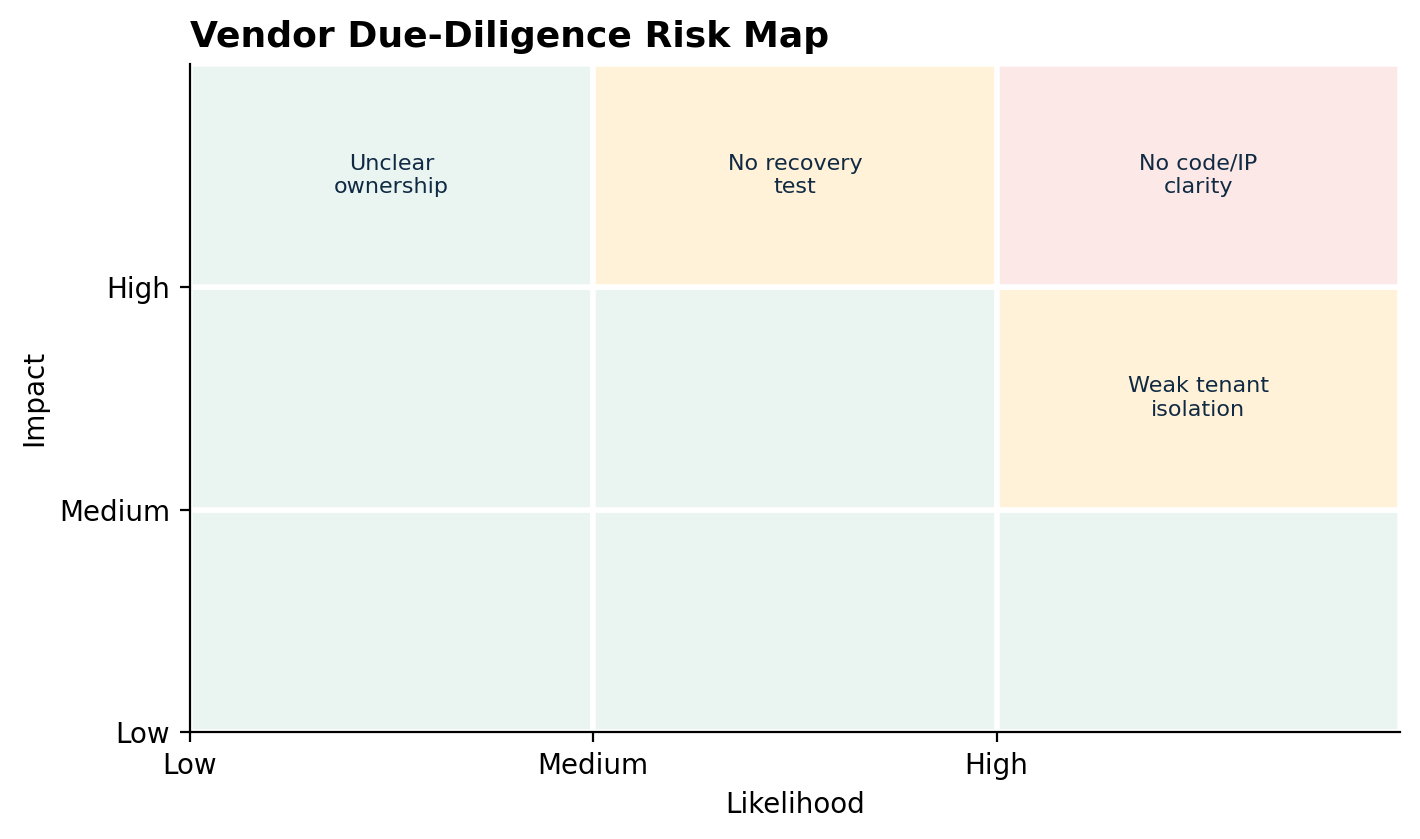
Figure 4. Illustrative risk map. Placement is a discussion aid, not a statistically measured risk model.
Portfolio claims cannot be verified, or the vendor cannot explain its specific role in the work.
The sales team cannot introduce the engineers who will own architecture and delivery.
Estimates omit acceptance criteria, QA, deployment, migration, or support without making the exclusions clear.
Tenant isolation, backup restoration, incident response, or security verification are treated as future concerns.
Source code, cloud accounts, credentials, or production data are expected to remain exclusively under vendor control.
Project status is reported as activity completed rather than working software, validated outcomes, risks, and decisions.
Promises of guaranteed timelines or outcomes are made before dependencies and scope are understood.
A single unanswered question is not always a reason to reject a company. A pattern of evasive answers, unsupported claims, and refusal to document assumptions is a reason to pause or walk away.
Ready to Build Your SaaS Product?
Evaluate Post-Launch Support, Operations, and Handover
A SaaS product is not complete when the first version is deployed. It must be observable, supportable, recoverable, and maintainable. Agree on the handover package before development begins.
Repository access, branching and release conventions, environment configuration, and build instructions.
Architecture diagrams, API documentation, data model notes, and key decision records.
Automated test suite, known limitations, security findings, and dependency inventory.
Monitoring dashboards, alert ownership, incident runbooks, backup policies, and restore-test evidence.
Deployment and rollback procedures, infrastructure definitions, secrets ownership, and access review.
Support hours, severity definitions, escalation contacts, warranty boundaries, and maintenance responsibilities.
Exit assistance, data export, credential rotation, knowledge-transfer sessions, and deletion/retention obligations.
Cloud operating costs should also be reviewed as usage changes. Google Cloud’s Well-Architected cost-optimization guidance, reviewed 13 October 2026, emphasizes aligning cloud spending with business value and considering unit economics. For a SaaS product, useful measures might include cost per active tenant, cost per transaction, or infrastructure cost per workload, provided each is defined consistently and interpreted alongside service quality.
A 30-Day Plan for Choosing a SaaS Development Company
Period | Work | Output / Decision Gate |
|---|---|---|
Days 1–5 | Define goals, scope boundaries, constraints, and vendor brief | Approved evaluation brief and must-have criteria |
Days 6–10 | Shortlist candidates; collect proposals and assumptions | Comparable proposal set and open-question log |
Days 11–17 | Technical workshops, portfolio validation, reference checks | Evidence-backed scorecard and risk register |
Days 18–23 | Commercial, security, IP, support, and exit review | Negotiation list and draft contract terms |
Days 24–30 | Paid discovery or pilot if appropriate; final decision | Decision memo, success criteria, and first-phase plan |
This is an illustrative planning sequence, not a promise that procurement can be completed in 30 days. Regulated industries, complex integrations, security reviews, or enterprise procurement may require more time.
Conclusion: Choosing the Right SaaS Development Company
The right SaaS development company combines relevant product experience with clear engineering reasoning, secure delivery practices, transparent commercial terms, and a credible plan for operating and evolving the product. Evaluate how the team thinks, what it can demonstrate, what it puts in writing, and whether it helps you make better decisions.
Zignuts can be considered as one potential engineering partner where its service scope, team capabilities, and delivery approach align with your requirements. Contact us today to discuss your SaaS product goals, explore your requirements, and assess the right approach through a discovery conversation and concrete deliverables

Hard Trivedi
Business Enthusiast | Exploring ideas, understanding business challenges, and turning insights into practical solutions that create meaningful value and growth.