
Executive Summary: Healthcare Digital Transformation Consulting
Healthcare digital transformation goes beyond adopting an electronic health record (EHR), a telehealth platform, or an AI tool. Healthcare Software Development plays an important role in this process by supporting the redesign of care journeys, clinical and administrative workflows, information exchange, governance, and technology operations to improve how healthcare is delivered and managed.
The revised document combines research charts, a milestone trend, a state comparison, a risk heatmap, a roadmap visual, and architecture and process frameworks. Statistical figures are sourced, while conceptual visuals are labelled as illustrative.
The strongest programmes begin with measurable service and operational problems, establish clear ownership and data governance, and modernize systems in manageable increments.
Interoperability is a foundational capability. Without trusted and well-governed information exchange, adding more applications can create new silos instead of supporting a connected patient journey.
This guide brings together global policy context, India-specific digital health milestones, recommended architecture, implementation sequencing, risk controls, buying criteria, and SEO assets.
Research statistics are explicitly attributed, while diagrams and frameworks are presented as illustrative recommendations rather than claims about specific client implementations.
Healthcare Digital Transformation Consulting at a Glance
Decision Area | Practical Direction |
|---|---|
Business case | Tie each initiative to patient access, clinical workflow, safety, service continuity, or administrative burden. |
Architecture | Prefer standards-based integration and modular capabilities; avoid unnecessary platform sprawl. |
Data & trust | Design consent, access control, provenance, retention, audit, and quality into the operating model. |
Delivery | Pilot a bounded workflow, measure baseline and outcomes, then scale based on evidence. |
Governance | Include clinicians, operations, security, privacy, IT, and patient representatives in decisions. |
Ready to Strengthen Your Healthcare Digital Strategy?

What Healthcare Digital Transformation Consulting Covers in Practice
Healthcare digital transformation is the redesign of care and operating models using digital capabilities, not digitization alone. Digitization converts analogue information into digital form; transformation changes the process that uses it. Scanning a paper referral into a document repository is digitization. Routing a referral electronically, checking completeness, assigning clinical ownership, tracking status, and notifying the patient is a transformed workflow.
The distinction matters because a technology deployment can be technically successful yet fail to improve the service. For example, an EHR may go live while clinicians still re-enter the same data into departmental tools. A telehealth service may exist but remain disconnected from scheduling, prescriptions, billing, follow-up, and the longitudinal record. Consulting should therefore connect strategy, service design, architecture, change management, and measurement.
Key Outcomes to Define Before Choosing Healthcare Technology
Patient experience: Easier access, clearer communication, fewer repeated forms, and continuity across care settings.
Clinical workflow: Less duplicate entry, more reliable information at the point of care, and appropriate decision support.
Operational performance: Fewer avoidable hand-offs, clearer work queues, better capacity visibility, and improved resource planning.
Resilience and trust: Controlled access, recoverability, traceable decisions, privacy protection, and dependable integrations.
Learning capability: Data that can be used responsibly for quality improvement, population health, and evaluated analytics or AI.
Why Strategy and Interoperability Matter in Healthcare Digital Transformation
A successful healthcare digital transformation roadmap should begin with patient and staff journeys rather than a vendor feature catalogue. Understanding existing processes helps identify delays, duplicated work, system dependencies, and opportunities for improvement. This approach ensures that organizations address actual operational needs instead of automating inefficient processes or investing in overlapping technologies.
Interoperability is equally important because healthcare systems need to exchange information and interpret and use it reliably. The OECD’s 2026 working paper describes interoperability as a longstanding but underachieved goal and estimates its potential value at 2.7%–6.6% of health expenditure annually across OECD-country estimates. This represents potential value, not guaranteed savings for an individual hospital or a forecast that can be applied unchanged to every country.
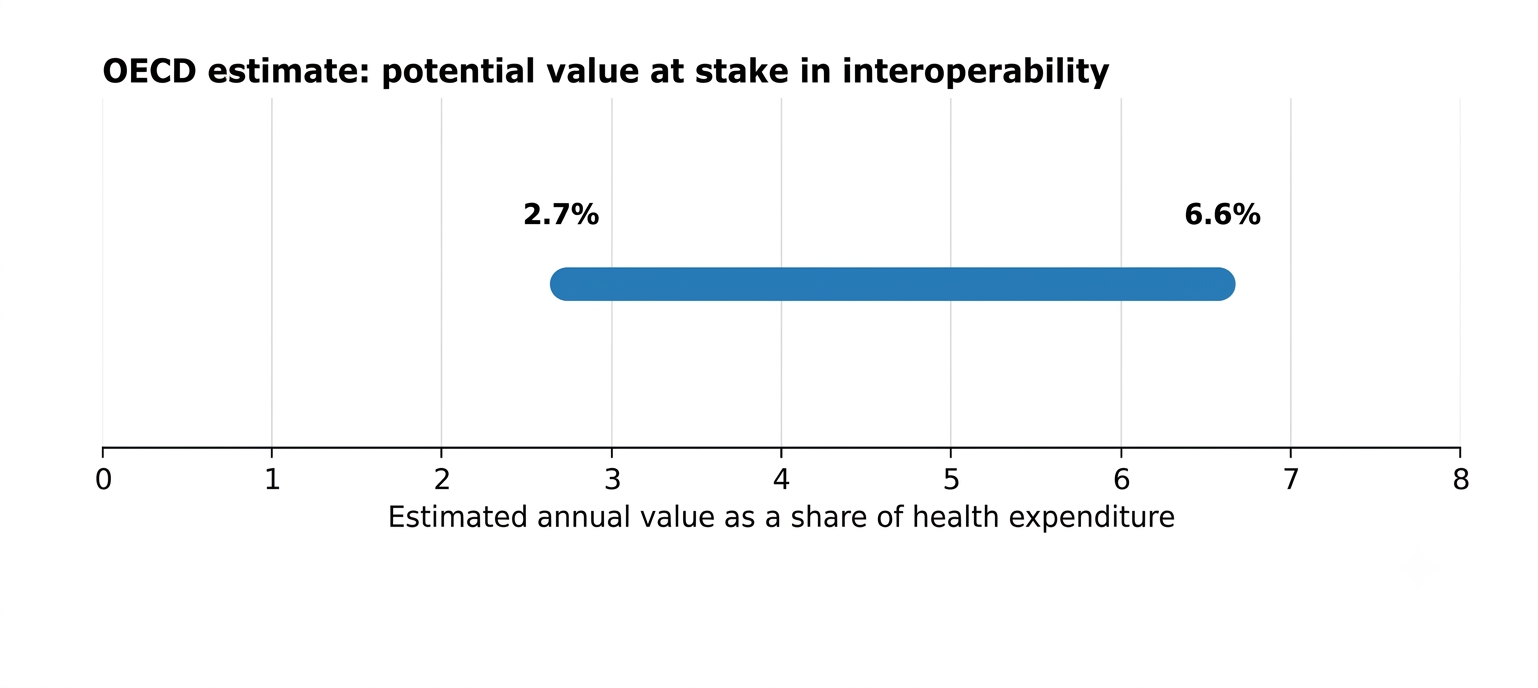
Figure 1. OECD estimate of potential annual value associated with interoperability.
For architecture planning, interoperability involves more than an API connection. It also requires:
Shared identifiers and terminology.
Consistent code mapping and data quality rules.
Consent and authorization checks.
Retry and reconciliation mechanisms.
Monitoring and clear responsibility when information exchange fails.
Standards such as HL7 FHIR support structured information exchange. However, implementation profiles, local regulations, partner capabilities, and workflow semantics still need to be agreed upon.
Ready to Strengthen Your Healthcare Digital Strategy?
Global and India Healthcare Digital Transformation Trends
Healthcare digital transformation is increasingly being shaped by national policies, digital infrastructure, interoperability standards, and stronger governance frameworks. Both global initiatives and India's digital health programmes highlight the growing importance of connected healthcare ecosystems.
Global Digital Health Developments
In May 2025, the World Health Assembly extended WHO’s Global Strategy on Digital Health through 2027 and requested the development of a successor strategy for 2028–2033.
WHO reported:
129 countries with national digital health strategies.
130 Member States have conducted digital health maturity assessments.
These figures indicate growing policy and assessment activity. However, they do not mean that every country has mature, interoperable healthcare systems.
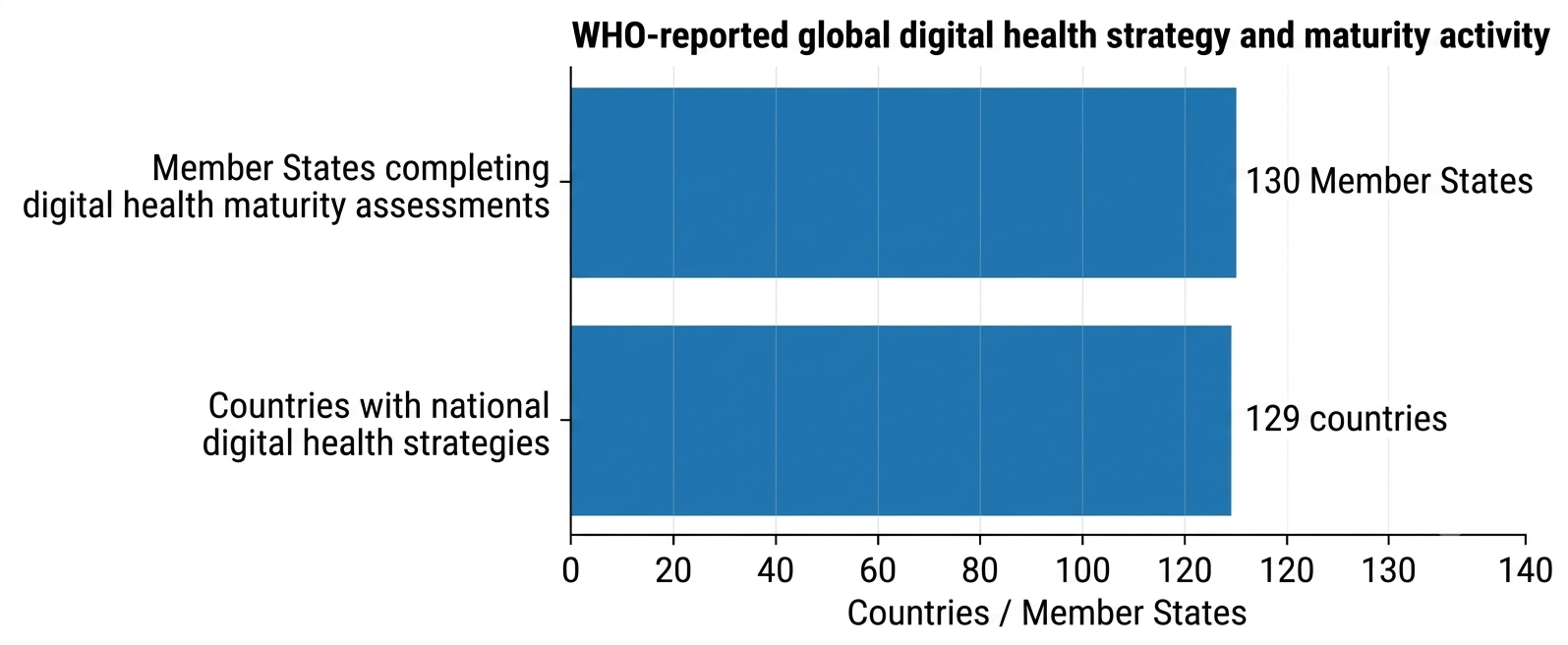
Figure 2. WHO-reported national strategy and maturity-assessment activity.
India's Digital Health Transformation: Ayushman Bharat Digital Mission
India's Ayushman Bharat Digital Mission (ABDM) is an important example of national-scale digital health infrastructure.
Government reporting stated that:
More than 100 crore health records had been linked with ABHA by 22 May 2026.
More than 450 public and private health technology solutions had integrated with the ABDM ecosystem.
Linked records doubled from 50 crore in February 2025 to over 100 crore in 15 months.
These figures represent programme milestones rather than direct measures of clinical outcomes, active usage, or data completeness at every healthcare provider.
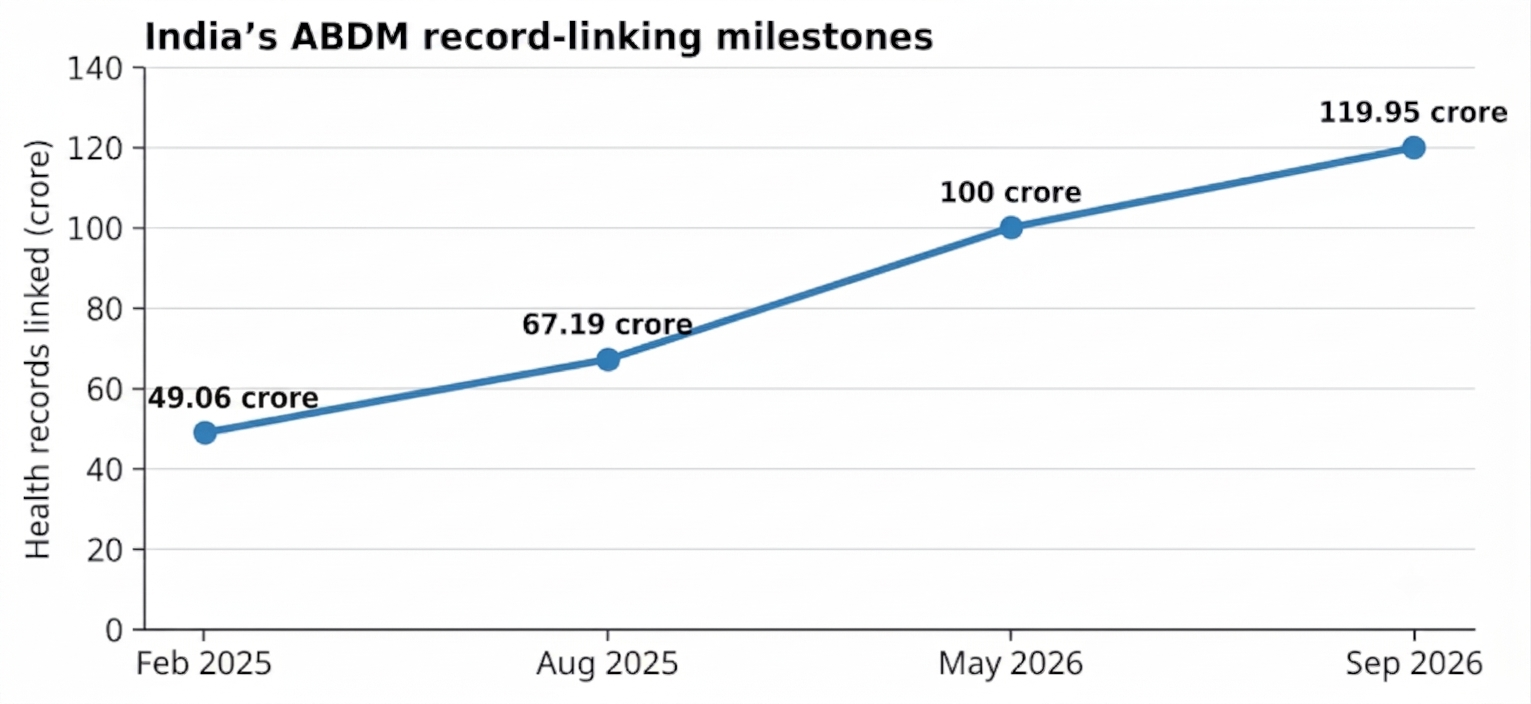
Figure 3. Reported ABDM linked-record milestones from official releases and a September 2026 programme tracker.
Ready to Strengthen Your Healthcare Digital Strategy?
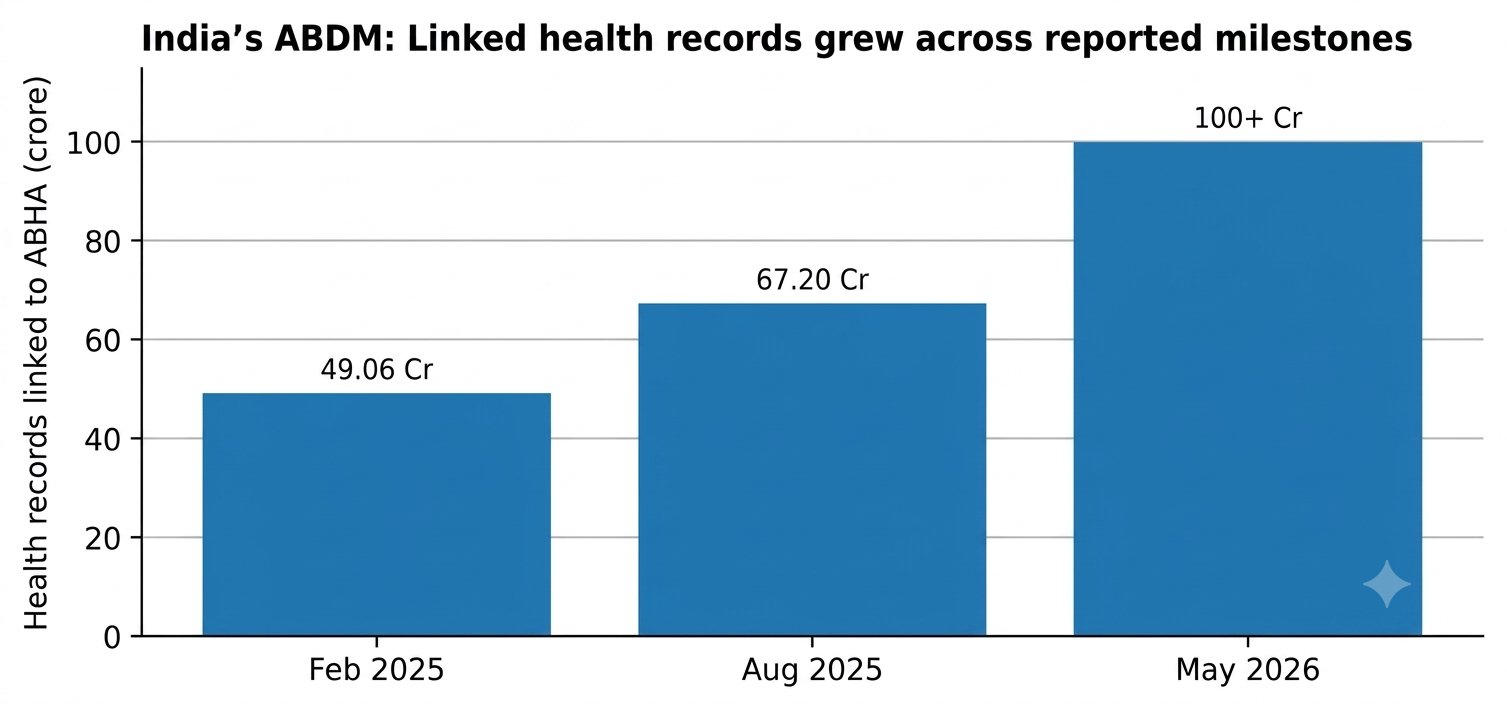
Figure 4. Reported ABDM health-record linking milestones in India.
What These Developments Mean for Indian Healthcare Providers
For Indian healthcare providers and technology vendors, these developments highlight the importance of understanding how ABDM-related identity, consent, registry, and information exchange requirements affect individual workflows.
Organizations should:
Assess relevant ABDM requirements before planning integrations.
Validate applicable technical specifications and sandbox behaviour.
Evaluate the readiness of integration partners.
Define operational responsibilities for information exchange.
Ensure that registration and record-linkage figures are not mistaken for proof of integration within a particular hospital.
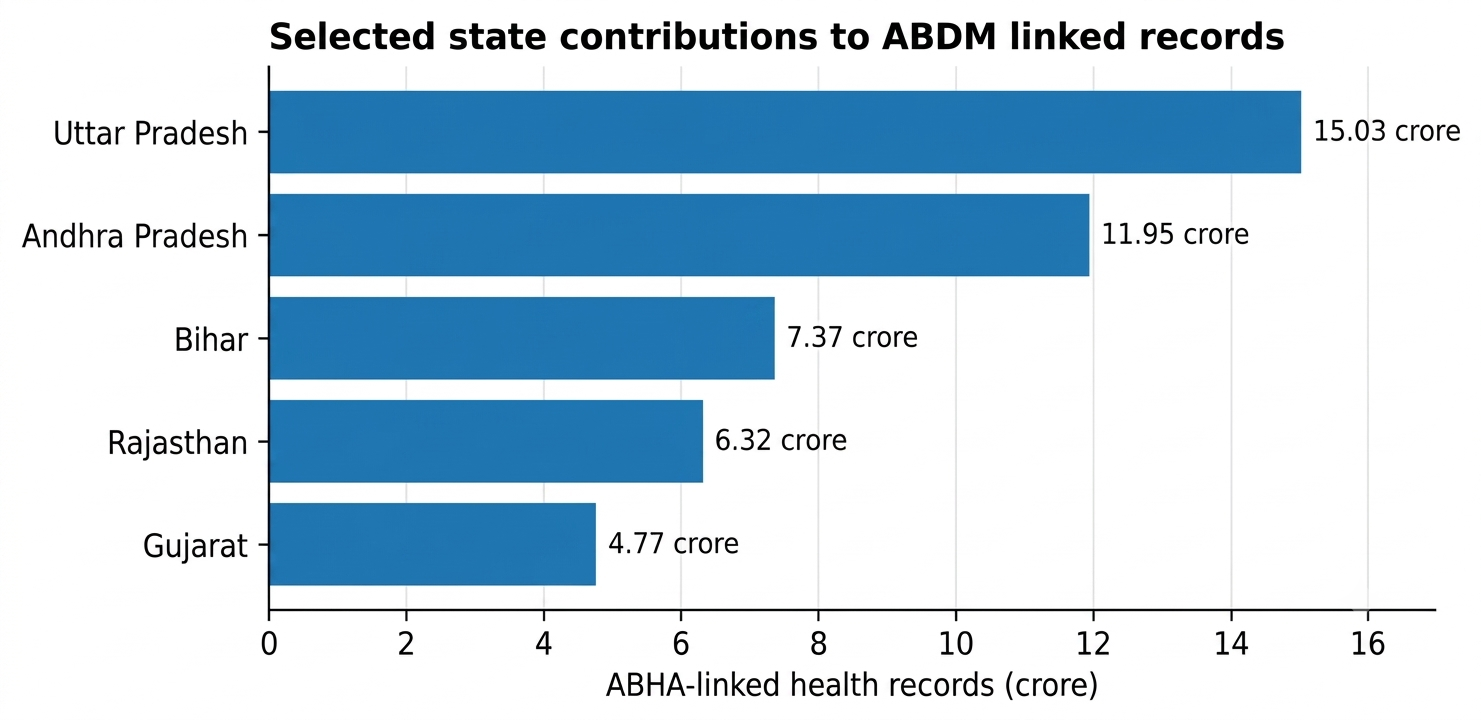
Figure 5. Selected state contributions reported in the Government of India’s May 2026 release.
Healthcare Digital Transformation Consulting: A Step-by-Step Lifecycle
A reliable programme moves from discovery to a bounded pilot and then scales only when workflow, safety, and operating measures support it. The phases below are a recommended process; the duration and sequencing should be tailored to scope, procurement, clinical risk, and existing system constraints.
Phase | Core Work | Exit Evidence |
|---|---|---|
1. Assess & discover | Map journeys, systems, pain points, constraints, stakeholders, baseline metrics. | Agreed problem statement, current-state map, baseline, and risks. |
2. Prioritize & design | Rank use cases by value, feasibility, risk, and dependency; define target workflows. | Outcome measures, target-state design, delivery backlog, accountable owners. |
3. Architect & prepare | Choose integration patterns, identity/access model, data rules, environments, migration plan. | Architecture decisions, security review, test strategy, migration rehearsal plan. |
4. Pilot & validate | Implement a narrow workflow; test clinical usability, data quality, downtime, and failure recovery. | User acceptance, safety sign-off, operational runbook, measured pilot results. |
5. Deploy & adopt | Stage rollout, train users, communicate changes, support go-live and issue triage. | Readiness approval, support coverage, adoption tracking, rollback plan. |
6. Monitor & improve | Review outcomes, reliability, incidents, equity, cost, and feedback; prioritize iterations. | Outcome review, remediation owners, updated roadmap. |
Healthcare Digital Transformation Workflow: From Discovery to Scaling
Step | Activity | Decision Gate |
|---|---|---|
Discover | Observe real workflows and interview patients/staff where appropriate. | Is the problem material and measurable? |
Define | Set a baseline, target, scope boundaries, and accountable owner. | Can the outcome be measured responsibly? |
Design | Map data, roles, integration, consent, exception handling, and support. | Are safety, privacy, and operational risks controlled? |
Pilot | Test with representative users and realistic edge cases. | Does evidence justify expansion? |
Scale | Roll out in controlled waves with training and monitoring. | Are performance and adoption stable? |
Ready to Strengthen Your Healthcare Digital Strategy?
Healthcare Digital Transformation Architecture: Building a Connected Ecosystem
A practical reference architecture organizes the healthcare ecosystem into user experiences, clinical and administrative applications, integration, data services, and shared security and operations. It provides a structured approach to planning connected healthcare systems without requiring every organization to adopt every layer.
Layer | Typical Capabilities | Design Considerations |
|---|---|---|
Experience | Patient portal, clinician workspace, care-team tools, telehealth, administration. | Accessibility, multilingual needs, role-specific journeys, usable downtime paths. |
Application | EHR/EMR, scheduling, referrals, pharmacy, laboratory, imaging, billing, case management. | Clear system-of-record ownership; avoid duplicating the same workflow in several tools. |
Integration | API gateway, interface engine, FHIR services, partner connectors, event handling. | Versioning, idempotency, retries, mapping, consent enforcement, reconciliation. |
Data & analytics | Operational store, governed analytics platform, terminology services, reporting. | Purpose limitation, data quality, lineage, retention, minimization, access separation. |
Security & operations | Identity, MFA, RBAC/least privilege, encryption, audit, monitoring, backup, recovery. | Threat modelling, incident response, key management, tested restoration, evidence retention. |
Healthcare Data Integration: How a Patient Referral Flows Across Systems
Sequence | System Action | Control to Verify |
|---|---|---|
1. Initiate | A clinician creates a referral from the clinical application. | Correct patient identity, required fields, authorized user. |
2. Validate | Integration layer checks schema, terminology, destination, and duplicates. | Validation errors are visible and actionable. |
3. Exchange | Referral is transmitted to the receiving organization or service. | Secure transport, consent/legal basis, correlation ID. |
4. Acknowledge | Receiving system confirms acceptance or returns an exception. | Retry policy, dead-letter queue, reconciliation owner. |
5. Complete | Appointment and clinical outcome update the originating workflow. | Status visibility, audit trail, patient communication. |
Use a modular monolith or a small number of well-defined services when the team and domain are still evolving. Microservices can help where independent scaling, deployment, or ownership is justified, but they introduce distributed tracing, network failure modes, service security, and operational overhead. The architecture should follow the problem and team capability, not fashion.
High-Value Healthcare Digital Transformation Use Cases and Priorities
Prioritize use cases by patient or operational value, feasibility, risk, dependency, and ability to measure the result. Avoid assigning numerical scores that imply scientific precision unless the organization has agreed on a transparent scoring model. A simple workshop can classify use cases as “start now,” “prepare first,” or “defer” using explicit criteria.
Use Case | Potential Value | Dependencies and Watch-Outs |
|---|---|---|
EHR/EMR optimization | More reliable documentation and access to clinical context. | Workflow redesign, migration quality, training, role-based access. |
Referral and care coordination | Clearer ownership and fewer lost hand-offs. | Interoperability, status model, partner agreements, exception queues. |
Telehealth integration | More convenient access and continuity for suitable visits. | Identity, consent, scheduling, documentation, escalation and follow-up. |
Remote patient monitoring | Longitudinal signals for selected conditions and care plans. | Device validation, alert thresholds, clinical ownership, connectivity, equity. |
Clinical and operational analytics | Better visibility into service demand and quality measures. | Definitions, data lineage, denominator consistency, bias and access controls. |
AI-assisted workflows | Support for summarization, routing, coding assistance, or decision support where validated. | Clinical oversight, evaluation, privacy, explainability appropriate to use, monitoring. |
How to Prioritize Healthcare Digital Transformation Initiatives
Start with workflows that are frequent, painful, bounded, and owned by a team willing to change how work is done.
Prepare first when value depends on identity resolution, data cleanup, consent, terminology, or external partner readiness.
Defer high-risk automation when the organization cannot explain who is accountable, how errors are detected, or how a user can override the system.
For AI, use a lower-risk assistive workflow before automating decisions that can directly affect diagnosis, treatment, or access to care.
Ready to Strengthen Your Healthcare Digital Strategy?
Healthcare Data Security, Privacy, Compliance, and Patient Trust
Healthcare systems process sensitive information and support time-critical services. Security and privacy therefore belong in requirements, architecture, procurement, testing, and operations, not as a final checklist. The precise legal obligations depend on jurisdiction, organization type, data flows, and whether the provider is a covered entity, processor, business associate, or another regulated participant.
Essential Security and Privacy Controls for Healthcare Systems
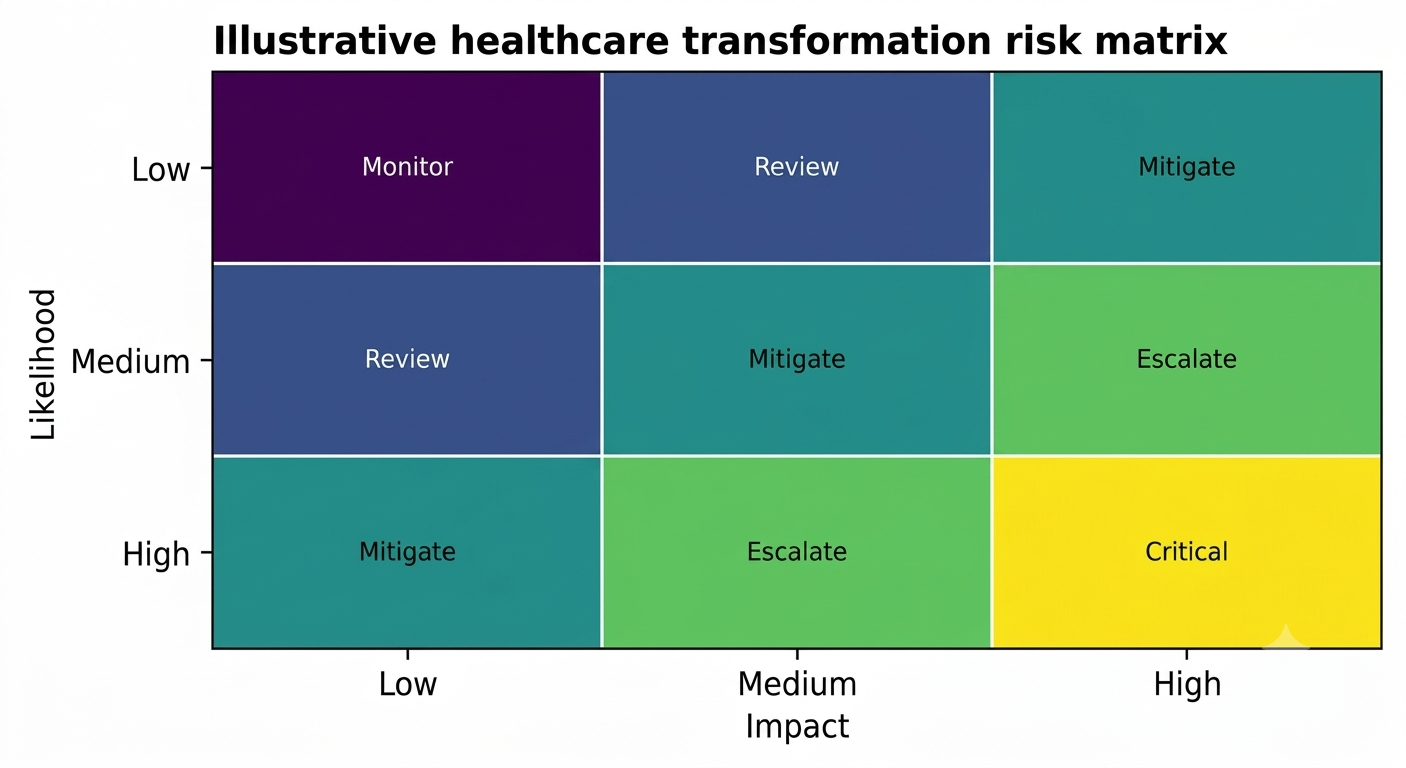
Figure 6. Illustrative risk matrix for prioritizing healthcare transformation risks.
Conceptual framework only. Likelihood and impact should be assessed by the programme team using its own evidence; this matrix contains no measured incident data.
Control Area | Questions for the Programme |
|---|---|
Identity and access | Is access tied to verified identities and job-relevant roles? Are privileged actions reviewed? |
Consent and purpose | Is the legal basis or patient consent captured where required, propagated, and auditable? |
Data protection | Is sensitive data encrypted in transit and at rest? Are secrets and keys managed separately? |
Auditability | Can the organization reconstruct who accessed or changed a record, when, and through which system? |
Data quality | Are patient matching, duplicate handling, provenance, correction, and reconciliation defined? |
Resilience | Are backups, recovery objectives, downtime procedures, and restoration tests documented? |
Third parties | Are vendor responsibilities, subcontractors, breach notification, data location, and exit plans clear? |
AI governance | Are intended use, evaluation data, human review, drift monitoring, and incident pathways defined? |
For US operations, HIPAA obligations and HHS guidance may apply to covered entities and business associates. In India, evaluate the Digital Personal Data Protection Act and applicable rules and sectoral requirements as they come into force, alongside ABDM policies and relevant contractual obligations. This guide is not legal advice; have qualified counsel validate applicability and current requirements before implementation.
The Role of Change Management in Healthcare Digital Transformation
Adoption fails when new systems add work, disrupt clinical routines, or leave users uncertain about responsibility. A training session cannot compensate for a workflow that is slower or unclear. Involve clinicians and frontline staff in discovery and usability testing, nominate workflow owners, and establish a feedback loop that can distinguish a training issue from a product defect or process-design problem.
Map role-specific changes: what users stop doing, start doing, and continue doing.
Test with realistic scenarios, including exceptions, interruptions, downtime, and cross-team hand-offs.
Provide role-based training and floor support around go-live, not only generic demonstrations.
Track adoption and unintended workarounds; protect staff time to report problems and improve the workflow.
Communicate what data is collected, why it is used, who can access it, and how patients can exercise relevant rights.
How to Measure Healthcare Digital Transformation Success
Choose a small set of measures that connect technical performance to care delivery and operations. Define each metric before launch, including its numerator, denominator, exclusions, source system, reporting cadence, and owner. Pair speed measures with quality and safety measures so that teams do not optimize one dimension at the expense of another.
Dimension | Example Measures | Interpretation Guardrail |
|---|---|---|
Access | Time to appointment, referral completion, no-show rate. | Segment by service and population; avoid attributing every change to the technology. |
Workflow | Duplicate entry, hand-off time, task backlog, documentation completion. | Use a baseline and check whether work shifted to another team. |
Quality & safety | Data completeness, matching errors, medication reconciliation issues. | Define severity and clinical relevance; investigate rather than hide outliers. |
Reliability | Availability, latency, failed interfaces, recovery time. | Measure user-visible impact and downstream consequences, not only server uptime. |
Adoption | Active use by role, completion rates, support requests, user feedback. | Distinguish meaningful workflow use from logins or superficial clicks. |
Equity | Completion and access measures by relevant population segments. | Use lawful, privacy-protective analysis and investigate disparities carefully. |
Cost & value | Cost per completed workflow, support effort, avoided manual processing. | State assumptions; avoid claiming causality without a suitable evaluation design. |
Where possible, use staged rollouts or comparison periods to understand whether observed changes are plausibly linked to the intervention. Document confounders such as staffing, seasonality, policy changes, and concurrent process improvements.
Ready to Strengthen Your Healthcare Digital Strategy?
Build vs. Buy vs. Integrate: Choosing the Right Healthcare Technology Strategy
Approach | Best Fit When | Main Trade-Offs |
|---|---|---|
Buy a commercial platform | Requirements are common, product maturity is important, and vendor roadmap fits. | Subscription and integration costs, vendor dependency, configurability limits. |
Configure existing systems | The core capability already exists and process fit can be achieved safely. | Upgrade constraints, custom configuration complexity, workflow compromises. |
Build custom software | Differentiated workflows or ecosystem needs cannot be met adequately by available products. | Higher ownership burden, ongoing security/maintenance, product governance. |
Integrate a best-of-breed ecosystem | Specialist products provide clear value and standards-based exchange is feasible. | More vendors, interface monitoring, master data, and incident coordination. |
Modernize incrementally | Legacy replacement is too risky or operationally disruptive for a single cutover. | Temporary coexistence, migration complexity, need for explicit retirement plans. |
A consulting partner should help establish the problem statement, challenge unnecessary customization, document architecture decisions, surface delivery risks, and leave the organization with maintainable systems and operational knowledge. Ask vendors to demonstrate realistic workflows and failure scenarios, not only polished happy-path demos.
Healthcare Digital Transformation Costs, Risks, and Common Mistakes
Healthcare transformation cost depends on scope and context. Major drivers include the number of facilities and workflows, legacy-system condition, data migration, integration partners, security and compliance requirements, availability expectations, training, parallel operation, analytics, licensing, cloud consumption, and long-term support. Any estimate should state assumptions, exclusions, currency, location, and the date of estimation.
Common Mistake | Why It Creates Risk | Better Practice |
|---|---|---|
Starting with a tool, not an outcome | The solution can digitize the existing problem. | Define workflow pain, baseline, owner, and success measures first. |
Treating integration as a one-off connector | Failures, data mapping, and partner changes become invisible. | Operate interfaces with monitoring, retries, reconciliation, and ownership. |
Migrating without data profiling | Duplicates, missing values, and incorrect mappings move into the new system. | Profile, cleanse, reconcile, rehearse, and sign off migration results. |
Leaving privacy until late | Consent and access assumptions can force expensive redesign. | Threat-model and map data flows during discovery and architecture. |
Over-automating too early | Errors may be hard to detect, and users may lose meaningful control. | Pilot with human review and explicit exception handling. |
Measuring only deployment | Go-live does not prove adoption or better outcomes. | Track operational, quality, experience, and reliability measures over time. |
Ignoring exit and downtime | Vendor changes or outages can interrupt care. | Define portability, backups, recovery, and tested continuity procedures. |
A 90-Day Roadmap for Healthcare Digital Transformation
The following is an illustrative planning structure, not a promise that every healthcare programme can be delivered in 90 days. Procurement, clinical safety reviews, integrations, regulatory assessment, and data migration can extend the schedule.
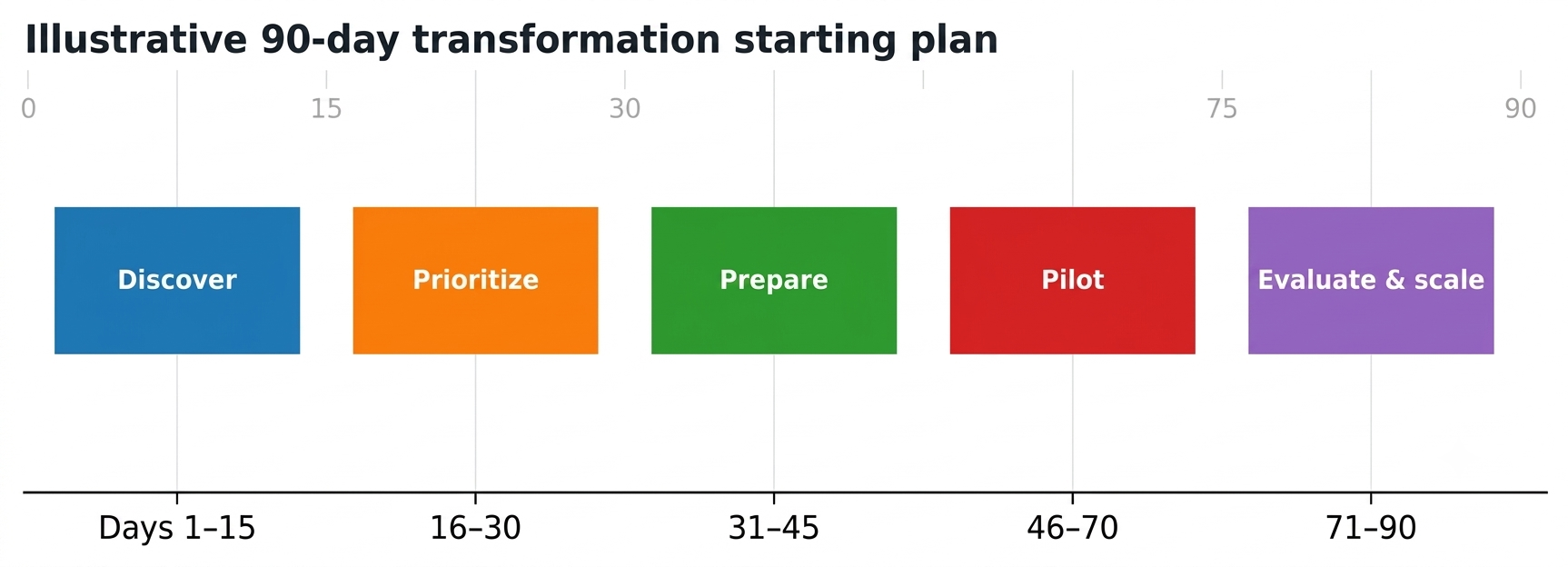
Figure 7. Example 90-day starting plan. Timing is illustrative and depends on scope, procurement, clinical review, and integration readiness.
Planning visual derived from the roadmap described in this guide; not a delivery commitment or benchmark.
Period | Focus | Deliverables |
|---|---|---|
Days 1–15 | Discovery and alignment | Stakeholder map, journey maps, baseline measures, system inventory, top risks. |
Days 16–30 | Prioritization and target design | Use-case shortlist, target workflow, architecture options, governance owners. |
Days 31–45 | Readiness and technical proof | Integration spike, data profile, security review, pilot acceptance criteria. |
Days 46–70 | Bounded pilot | Pilot implementation, user training, test evidence, incident and support runbooks. |
Days 71–90 | Evaluate and decide | Outcome review, remediation backlog, scale/defer decision, next-phase business case. |
Before scaling, confirm that the pilot works for real users, that data exchange is reliable, that exceptions are handled, and that security and support owners can operate the service. If evidence is mixed, revise the workflow or narrow the scope rather than declaring success based on delivery milestones alone.
Ready to Strengthen Your Healthcare Digital Strategy?
How to Choose the Right Healthcare Digital Transformation Consulting Partner
Healthcare workflow literacy: Can the team understand clinical, administrative, and patient-facing processes without reducing them to generic software requirements?
Architecture and integration: Can it explain data ownership, standards, migration, failure handling, identity, and observability in concrete terms?
Security and privacy: Does it involve security and privacy early and produce reviewable evidence rather than broad assurances?
Delivery transparency: Are scope, assumptions, dependencies, risks, decisions, and change control documented?
Knowledge transfer: Will internal teams receive runbooks, architecture records, integration documentation, training, and a clear support model?
Outcome measurement: Does the partner agree to baseline and post-launch measures without promising unsupported clinical or financial results?
The right engineering partner should be able to translate healthcare software strategies into practical solutions through application development, system integration, modernization, and delivery planning. The project scope should be clearly defined during the discovery phase, and any healthcare-specific experience or compliance capabilities should be verified directly rather than assumed.
Key Takeaways for Successful Healthcare Digital Transformation
Start with patient and staff outcomes; technology selection follows the workflow and business case.
Treat interoperability, identity, data quality, consent, and governance as foundational capabilities.
Pilot safely, measure the results, and scale only when evidence and operational readiness support it.
Make security, privacy, resilience, change management, and knowledge transfer part of delivery from day one.
Use sourced evidence carefully: programme milestones and global estimates provide context, not guaranteed project outcomes.
Conclusion: Building a Smarter Future Through Healthcare Digital Transformation
Healthcare digital transformation is an ongoing journey that requires more than adopting new technologies. It involves improving patient experiences, simplifying clinical and administrative workflows, strengthening interoperability, and building secure, reliable healthcare systems. A clear strategy, the right technology choices, effective change management, and measurable outcomes help healthcare organizations make this transformation sustainable.
Whether modernizing existing systems, developing custom healthcare applications, integrating EHR platforms, or exploring AI-powered solutions, every initiative should address a defined operational or patient-care need. The right technology partner can help turn these priorities into practical, scalable solutions. Contact us today to discuss your requirements and explore how healthcare software development can support your organization's digital transformation goals.

Hard Trivedi
Business Enthusiast | Exploring ideas, understanding business challenges, and turning insights into practical solutions that create meaningful value and growth.