

SaaS Market Opportunity: Why Enterprise Platforms Are a Global Growth Area
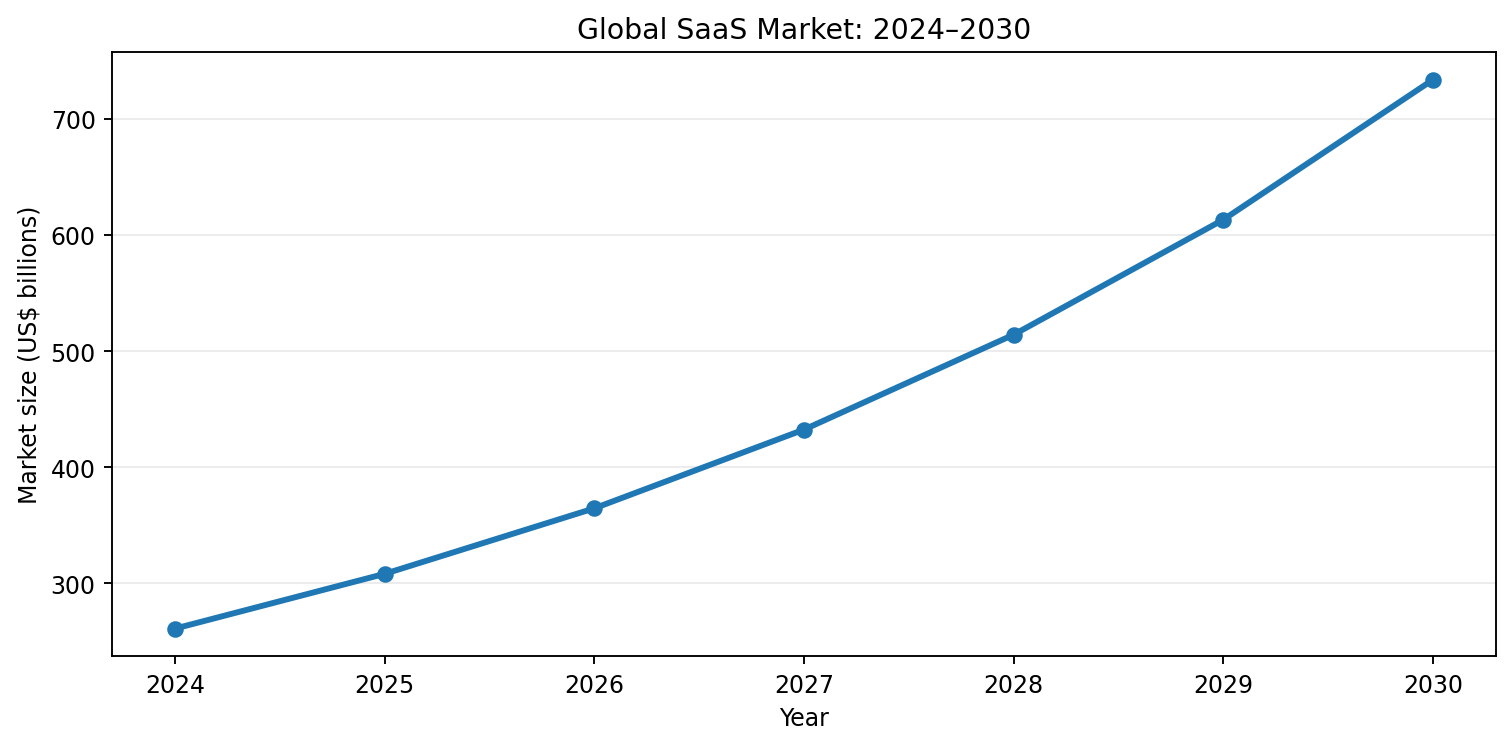
Enterprise SaaS is entering a period where cloud scale, AI-enabled workflows, and enterprise modernization reinforce one another. As businesses increasingly adopt cloud-based platforms to modernize operations and support evolving digital workflows, SaaS Development Services are becoming an important part of building scalable, secure, and enterprise-ready software solutions. A 2025 SEBI-filed prospectus citing Arizton estimates the global SaaS market at US$261.1 billion in 2024 and US$733.72 billion by 2030, an 18.79% CAGR.
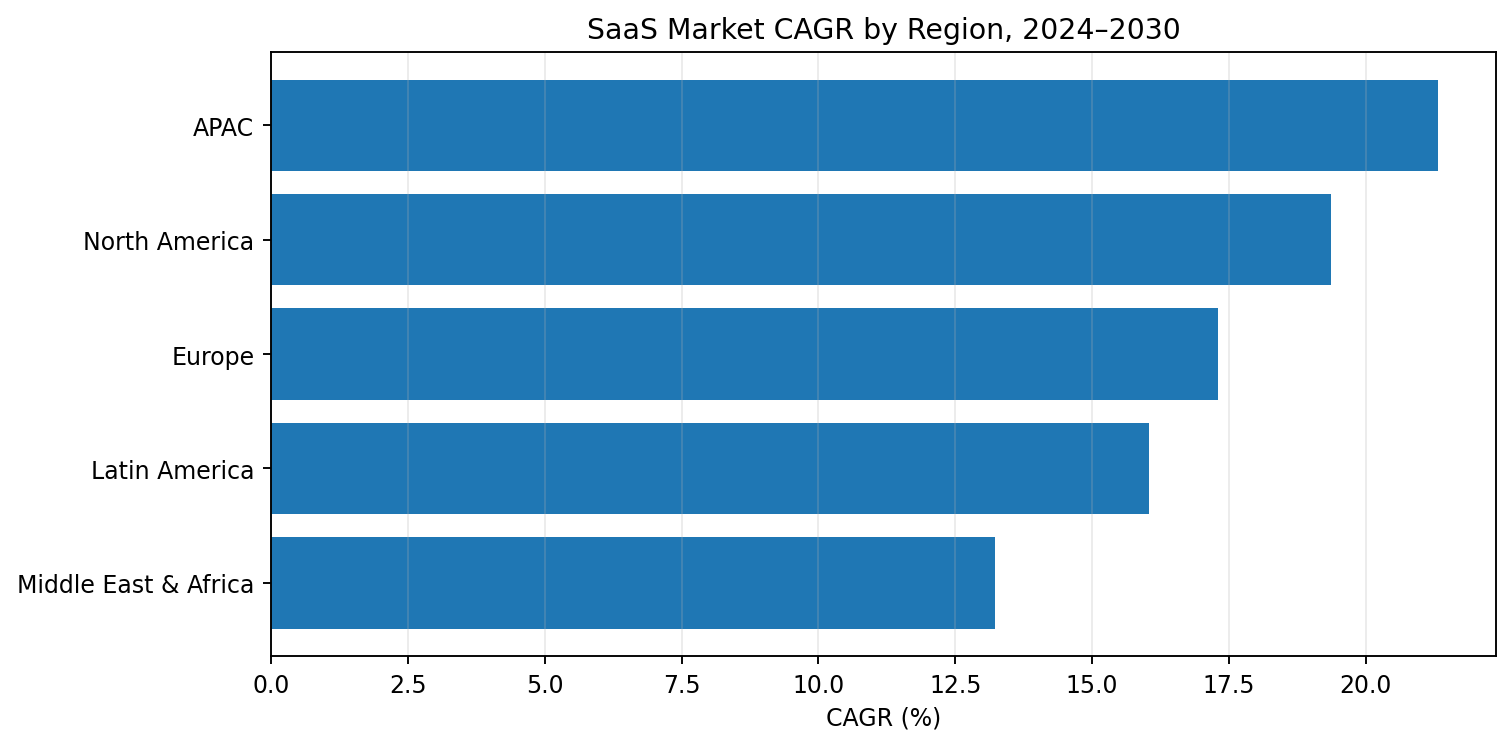
The same source projects APAC at a 21.31% CAGR through 2030, ahead of North America at 19.37% and Europe at 17.29%.
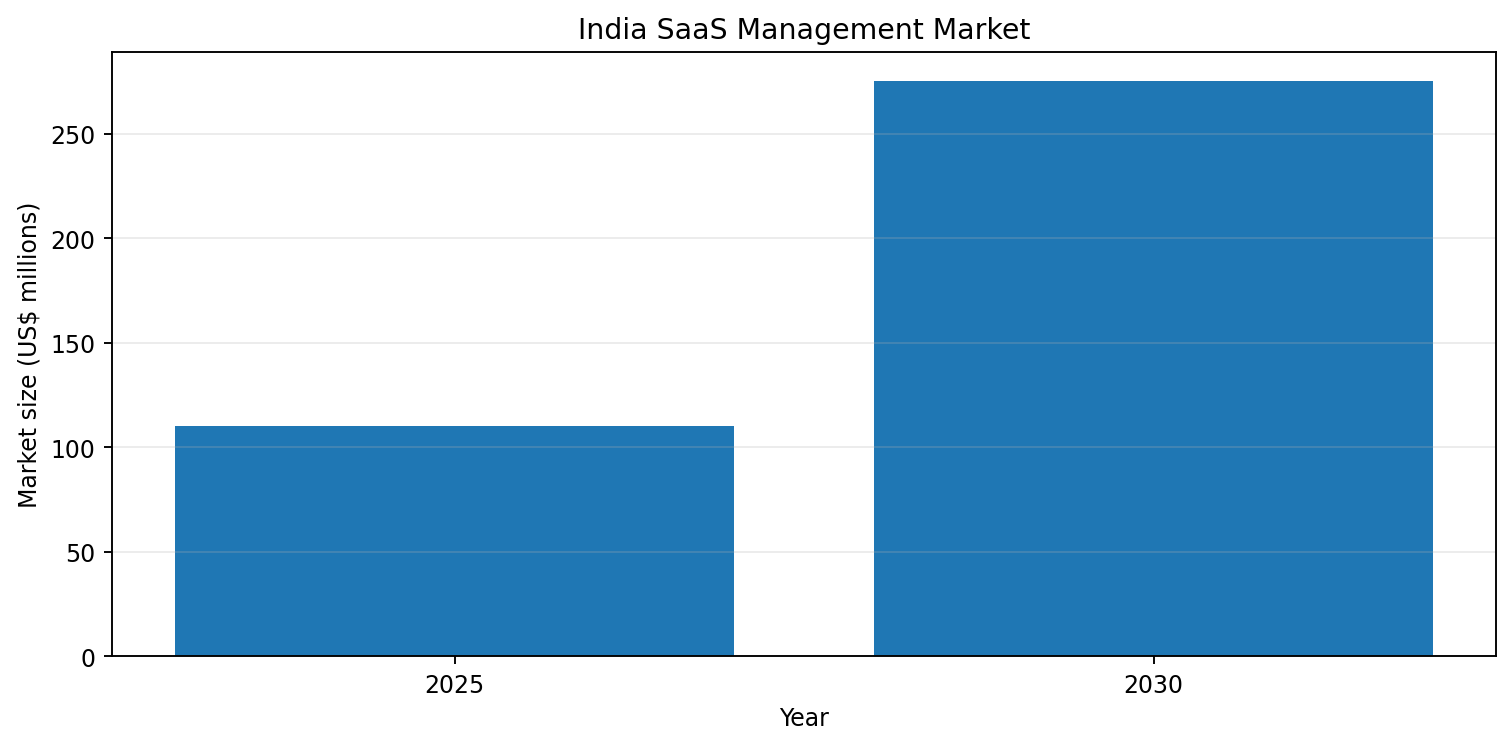
India is especially relevant for a global SaaS engineering strategy. MarketsandMarkets estimates the India SaaS management market at US$110.1 million in 2025 and US$275.4 million by 2030, a 20.1% CAGR. This is a SaaS management segment, not the entire Indian SaaS market.
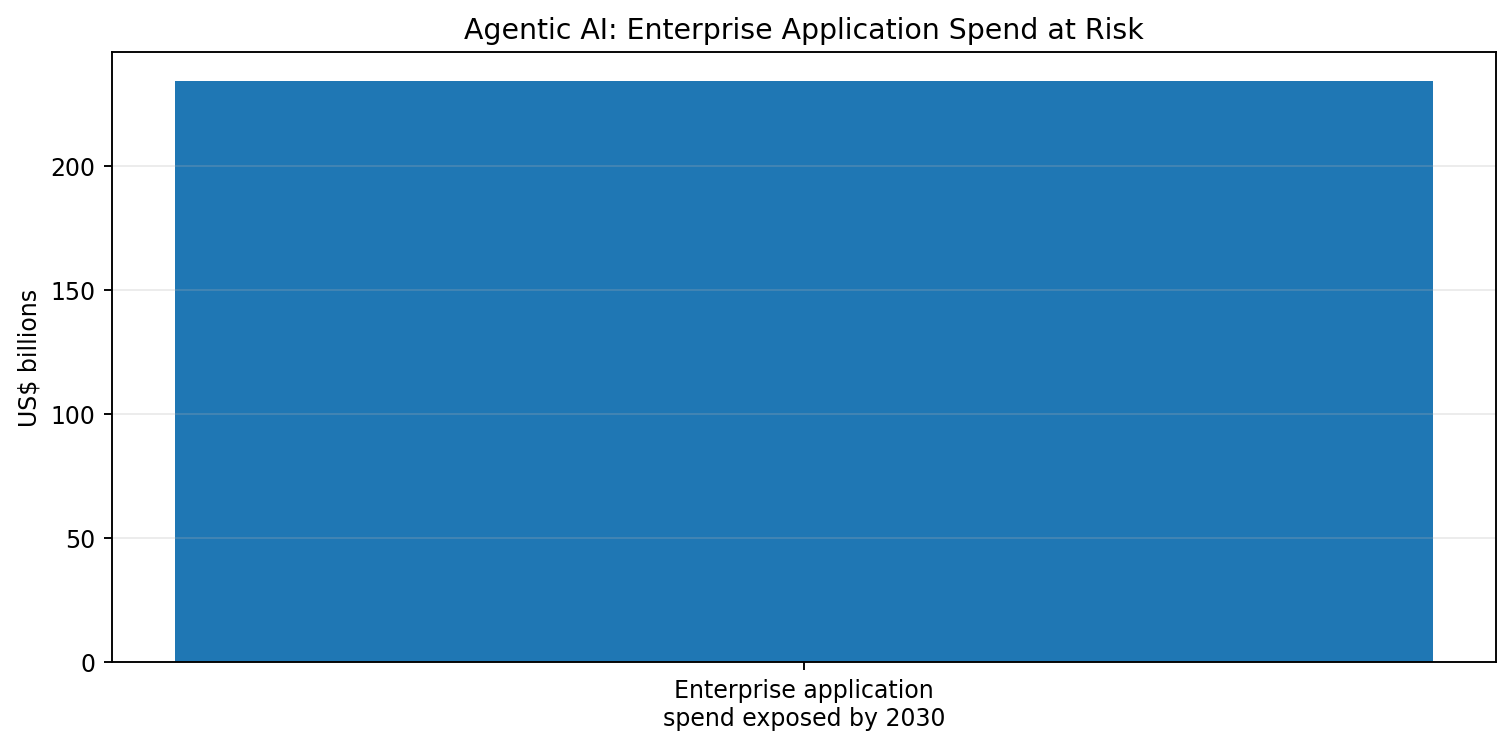
AI is changing enterprise software economics. Gartner says up to US$234 billion of enterprise application spending could be exposed to agentic AI arbitrage by 2030, roughly 20% of enterprise application SaaS spending.
Build a Secure and Scalable Enterprise SaaS Platform

Enterprise SaaS Platform Development: What It Really Involves
Enterprise SaaS platform development is more than building a web application and hosting it in the cloud. It is the engineering of a repeatable software service that can support multiple organizations with strong tenant isolation, enterprise identity, secure data access, reliable integrations, predictable performance, automated delivery, and long-term operational visibility.
That distinction matters because enterprise customers evaluate software at several levels at once. They care about the product experience, but they also care about how their data is isolated, how employees authenticate, how administrators control access, how integrations recover from failure, how the platform behaves under load, and how quickly issues can be diagnosed.
An effective enterprise SaaS development strategy therefore connects product engineering with platform engineering. The goal is not to build the most complicated architecture. The goal is to make the architecture proportional to the business model while keeping the platform secure, maintainable, observable, and capable of growth.
A useful way to think about the platform is as a shared foundation with tenant-aware capabilities. Customers should receive a consistent product and release experience, while the underlying architecture can adapt to different tenant sizes, security requirements, workload patterns, and service tiers.
Visual Architecture Map
This simplified map helps non-technical and technical readers see how the major SaaS layers connect.
↕ CROSS-LAYER CONTROLS ↕
Tenant Context • Security Policies • Telemetry • Operational Controls
CUSTOMER & EXPERIENCE |
PLATFORM & BUSINESS LOGIC |
DATA, INFRASTRUCTURE & OPERATIONS |
How Does Enterprise SaaS Architecture Work?
A strong enterprise SaaS architecture establishes tenant context early and carries it consistently through identity, application services, data access, integrations, background processing, and operations.
A typical platform contains customer-facing applications, an API or ingress layer, identity and access management, tenant management, business services, data services, integration components, background processing, observability, and cloud infrastructure. These capabilities do not have to become separate microservices. Their boundaries should reflect domain ownership, scaling needs, security requirements, and operational reality.
A modular monolith can be an effective choice when the product is still evolving, and the team needs simple deployment and debugging. Microservices become more compelling when independent scaling, deployment independence, organizational ownership, or distinct workload characteristics justify distributed-system complexity.
Architecture should also distinguish the control plane from the customer-facing application experience where appropriate. Tenant onboarding, configuration, subscription or entitlement management, provisioning, and platform operations often have different lifecycle requirements from the core product workflows.
A practical architecture review should ask five questions: What needs to scale independently? What must be isolated? What changes frequently? What needs to be observable by tenant? And what operational complexity can the team realistically support?
Visual Flow: From New Customer to Active SaaS Tenant
A simplified enterprise SaaS lifecycle showing where automation and tenant context should appear.
1. Sign Up | 2. Provision | 3. Identity | 4. Configure | 5. Activate | 6. Operate |
|---|---|---|---|---|---|
Customer creates organization | Tenant, plan, and resources created | Users linked to tenant context | Roles, integrations, and policies | Tenant begins production use | Monitor, support, meter, and optimize |
How Should Multi-Tenant SaaS Architecture Be Designed for Enterprise SaaS Development?
Multi-tenancy is the architectural foundation of SaaS because the platform must serve multiple organizations while ensuring each tenant can access only its own permitted resources.
AWS describes the tenant as a fundamental SaaS construct and emphasizes that tenant context should become a first-class part of identity and architecture. (AWS SaaS Lens)
The most common isolation approaches are pooled, siloed, and hybrid. In a pooled model, tenants share infrastructure and resources. This can improve utilization and reduce operating costs, but it requires strong isolation controls and workload management. In a siloed model, selected tenants receive dedicated resources, which can help satisfy stricter isolation or compliance needs but increases infrastructure and operational costs.
Hybrid models can be useful when the majority of customers can operate in a shared environment while a smaller group requires dedicated resources. AWS documents hybrid approaches where tenants can use separate environments while retaining a unified management and operating experience. (AWS SaaS Lens)
The right choice should be based on data sensitivity, compliance requirements, tenant size, workload variability, infrastructure economics, deployment model, recovery requirements, and the team's operational maturity.
Multi-Tenancy Models at a Glance
Model | Best suited for | Advantages | Trade-offs |
|---|---|---|---|
Pooled | Large tenant populations and shared workloads | Resource efficiency, simpler fleet management, lower unit cost | Isolation and noisy-neighbor controls require discipline |
Siloed | High-security, regulated, or unusually large tenants | Stronger resource isolation and predictable capacity | Higher cost, provisioning, and operational overhead |
Hybrid / Bridge | Mixed customer tiers and enterprise requirements | Balances shared efficiency with dedicated capacity | More complex management and cost modeling |
Visual Flow: Tenant-Aware Security Boundary
The important idea is that authentication alone is not the final isolation boundary.
User | Tenant Context | Authorization | Service Layer | Data / Resource | Audit |
|---|---|---|---|---|---|
Authenticates | Identity is bound to tenant | Role/policy evaluated | Request carries tenant scope | Access constrained to tenant | Action recorded and monitored |
Build a Secure and Scalable Enterprise SaaS Platform
How Do Enterprise SaaS Platforms Prevent Cross-Tenant Data Access?
Tenant isolation must be enforced separately from ordinary authentication and authorization because a correctly authenticated user can still access another tenant's resources if tenant context is not applied correctly.
AWS explicitly treats tenant isolation as a foundational SaaS concern and warns that crossing a tenant boundary can become a severe business and security event. (AWS SaaS Lens)
Tenant context should flow from the identity layer into API requests, service calls, data access, storage operations, background jobs, event consumers, and audit records. AWS recommends binding user identity to tenant identity so tenant context becomes a reusable construct across the architecture rather than a collection of disconnected lookups. (AWS SaaS Lens)
Testing should deliberately attempt to break those boundaries. Negative scenarios should include manipulated resource identifiers, unauthorized API calls, cross-tenant background jobs, stale credentials, direct storage access, cache collisions, and event-processing mistakes.
The strongest designs also reduce developer exposure to tenancy mechanics by providing reusable libraries, middleware, policies, or shared constructs. AWS recommends limiting developer awareness of multi-tenant mechanics where possible so the platform can enforce policies consistently. (AWS SaaS Lens)
What Security and Identity Capabilities Does Enterprise SaaS Need?
Enterprise SaaS security should connect identity, authorization, tenant isolation, data protection, infrastructure protection, monitoring, and incident response instead of treating security as a final testing phase.
Enterprise customers commonly expect capabilities such as SSO, MFA, RBAC, user provisioning and deprovisioning, audit logging, encryption, secrets management, secure APIs, and controlled administrative access.
Authentication establishes who the user is. Authorization establishes what the user can do. Tenant isolation establishes which customer-owned resources that identity is permitted to reach. Keeping those concepts distinct makes the security architecture easier to reason about and test.
Security requirements should also influence database design, network architecture, storage access, deployment environments, backup strategy, and observability. Compliance requirements should be mapped to actual contractual and regulatory obligations rather than handled as generic checkbox exercises.
Enterprise identity is also part of the product experience. If a customer already manages users through a corporate identity provider, the SaaS platform should make onboarding, role mapping, access removal, and tenant administration predictable.
How Do You Build an Enterprise SaaS Platform for Scale?
Scalability comes from controlling the dimensions that can grow independently: tenants, users, requests, data, background work, integrations, and reporting workloads.
Stateless application services can make horizontal scaling easier. Caching can reduce repeated data access. Queues can absorb bursty or long-running work. Database indexing, connection management, partitioning, read scaling, and workload separation can protect transactional performance as data grows.
Enterprise SaaS also has to manage the noisy-neighbor problem. One tenant may run a large import, generate reports, call APIs heavily, or create a sudden workload spike. Rate limits, quotas, workload prioritization, asynchronous processing, tenant tiers, and dedicated resources can be used where justified.
AWS recommends aligning infrastructure consumption with tenant activity and creating tenant-aware operational views so teams can see how individual tenants and tiers consume shared resources. (AWS SaaS Lens)
Performance should be measured using more than average response time. Useful signals include tail latency, throughput, error rate, database saturation, queue depth, cache behavior, dependency latency, and tenant-level workload patterns.
Visual Flow: Enterprise SaaS Delivery Lifecycle
A practical end-to-end view from discovery to continuous operation.
Discover | Design | Build | Validate | Release | Operate |
|---|---|---|---|---|---|
Business + tenant requirements | Architecture + UX + security | Modules + APIs + integrations | Functional + security + performance | CI/CD + controlled rollout | Observe + improve + scale |
How Should Enterprise SaaS Handle APIs and Integrations?
Enterprise SaaS integrations should be designed as production dependencies, with explicit contracts for authentication, versioning, retries, idempotency, rate limits, errors, observability, and backward compatibility. For Enterprise SaaS Platforms, reliable integrations are essential because they often connect CRM, ERP, HR, finance, payment, identity, analytics, communication, data warehouse, and partner systems.
API-First Strategy: Define stable resource models, versioning rules, validation, pagination, authentication, authorization, rate limits, and error contracts.
Event-Driven Integrations: Use asynchronous patterns to reduce coupling while carefully handling duplicate messages, ordering, retries, dead-letter queues, and event versioning.
Tenant-Aware Monitoring: Track which tenant was affected when an integration fails, whether the issue is transient, whether retry is safe, and whether the customer experience can recover automatically.
Production Reliability: Treat external integrations as critical dependencies and design them for backward compatibility, observability, and failure recovery.
What Role Do DevOps and Observability Play in Enterprise SaaS Platforms?
Because SaaS is continuously operated rather than delivered once, automated deployment and tenant-aware observability are core capabilities of modern Enterprise SaaS Platforms.
Automated CI/CD: A mature pipeline can include automated testing, security checks, build validation, infrastructure validation, deployment automation, smoke tests, monitoring, and rollback.
Infrastructure as Code: Infrastructure as code helps keep environments reproducible and reduces configuration drift across development, staging, and production.
Safe Deployment Strategies: Rolling releases, canary releases, blue-green deployments, and feature flags can reduce deployment risk when supported by the architecture.
Tenant-Aware Observability: Monitor logs, metrics, traces, error rates, latency, database health, queue depth, integration failures, authentication events, tenant activity, and resource consumption.
Customer-Level Monitoring: Operations teams should be able to identify which tenant is affected by an issue rather than relying only on global platform health dashboards.
Automated Tenant Onboarding: Provisioning, configuration, identity setup, entitlements, and initial resources should follow repeatable workflows, so customer growth does not create proportional manual work.
Operational Scalability: DevOps automation and observability help SaaS teams release reliably, identify issues faster, and maintain platform performance as the number of tenants grows.
How Much Does Enterprise SaaS Development Cost?
There is no single responsible price for enterprise SaaS development because cost depends on product scope, architecture, integrations, security, scale, compliance, and long-term operating requirements.
The major cost drivers include the number and complexity of product workflows, user roles, tenancy model, enterprise identity, integrations, database architecture, analytics, security requirements, infrastructure model, performance targets, testing depth, deployment automation, and maintenance.
Development cost and operating cost should be evaluated separately. A platform that is inexpensive to build can become expensive to run if tenant provisioning is manual, infrastructure is oversized, integrations require constant intervention, or each enterprise customer becomes a separate deployment.
For budgeting, organizations should define an initial product scope, expected tenant profile, target service levels, security and compliance requirements, integration inventory, and expected growth. Those inputs provide a more useful estimate than simply counting screens.
Decision Flow: Choosing an Enterprise SaaS Architecture
Use the business and operational constraints first; choose technology second.
Start | Isolation | Workload | Team | Delivery | Architecture |
|---|---|---|---|---|---|
Define product + scale | How strict? | How variable? | How many owners? | How independent? | Choose simplest fit |
Build a Secure and Scalable Enterprise SaaS Platform
Which Enterprise SaaS Development Approach Is Best: Modular Monolith, Microservices, or Serverless?
There is no universal winner. The appropriate architecture depends on domain maturity, workload variability, team structure, deployment requirements, and operational capability.
Modular Monolith for Enterprise SaaS Development: A modular monolith is often a strong option when the product domain is still changing because it preserves clear internal boundaries without introducing distributed-system overhead.
Microservices for Enterprise SaaS Development: Microservices can be justified when teams need independent deployment, different services have distinct scaling characteristics, or business boundaries are mature enough to support independent ownership. The trade-off is more networking, tracing, deployment, failure handling, and operational complexity.
Serverless for Enterprise SaaS Development: Serverless can be useful for event-driven or highly variable workloads where reducing infrastructure management is valuable.
Containers for Enterprise SaaS Development: Containers can be a strong fit when runtime control and established container operations are important.
Choose the Simplest Enterprise SaaS Architecture: The best architecture is the simplest one that satisfies the product's security, scale, reliability, and organizational requirements.
What Are the Most Common Enterprise SaaS Development Mistakes?
The most expensive mistakes are usually architectural and operational: weak tenant isolation, premature complexity, insufficient observability, uncontrolled customization, and designing only for average workloads.
Weak Tenant Isolation: Treating multi-tenancy only as a database concern can create security gaps across APIs, background processing, caches, storage, and integrations.
Premature Microservices Complexity: Introducing microservices before domain and team boundaries are clear can add operational complexity without solving a real scaling problem.
Uncontrolled Customization: Supporting enterprise customizations as permanent product forks can undermine the unified SaaS operating model. Configurable capabilities are generally a better approach than maintaining one-off product versions.
Designing Only for Average Workloads: Enterprise SaaS platforms should account for workload variability, tenant growth, and resource spikes rather than optimizing only for average usage.
Limited Observability: Measuring only global platform health can hide problems affecting individual customers. Tenant-aware telemetry helps identify tenant-level failures and performance issues.
How Should You Choose an Enterprise SaaS Development Company?
The right enterprise SaaS development partner should demonstrate architectural judgment, not just a list of technologies.
Evaluate experience in multi-tenant architecture, cloud infrastructure, security, identity, database design, APIs, integrations, DevOps, testing, observability, scalability, and long-term maintenance.
Ask practical questions: How will tenant isolation work? Which tenancy model is appropriate and why? How will SSO and RBAC map to tenants? How will database migrations work as data grows? How will large tenants be protected from noisy-neighbor effects? How will deployments be rolled back? How will integration failures be diagnosed? How will infrastructure cost be measured?
A strong partner should explain trade-offs and alternatives. The conversation should move from technology names to engineering outcomes: security boundaries, reliability, time to recover, deployment safety, scalability, operational cost, and maintainability.
Enterprise SaaS Development Best Practices
Use these principles as a practical checklist when planning, building, or reviewing an enterprise SaaS platform.
Make tenant identity and tenant isolation first-class architectural concerns.
Choose pooled, siloed, or hybrid tenancy based on real security, compliance, workload, and cost requirements.
Keep authentication, authorization, and tenant isolation conceptually distinct.
Automate tenant onboarding, provisioning, configuration, and lifecycle operations.
Use reusable tenancy controls so developers do not repeatedly implement isolation logic.
Design APIs for versioning, backward compatibility, retries, and idempotency.
Separate long-running work from synchronous user requests.
Measure performance and resource consumption at tenant and tier level where useful.
Treat observability, auditability, and incident response as product capabilities.
Prefer configuration and extensibility over uncontrolled customer-specific code forks.
Automate testing, security checks, infrastructure, deployment, and rollback.
Review architecture regularly as tenant count, workload patterns, and team structure change.
Industry Application Map
The same enterprise SaaS principles can be adapted to different verticals while keeping tenant isolation, identity, integrations, and observability as reusable platform foundations.
Industry | Typical SaaS Workload | Key Enterprise Concern | High-Value Content Angle |
|---|---|---|---|
FinTech | Transactions, risk, reconciliation | Security + auditability | Secure financial SaaS architecture |
Healthcare | Records, workflows, integrations | Privacy + access control | Healthcare SaaS security |
Logistics | Orders, tracking, routing | Scale + real-time data | Scalable logistics SaaS |
Manufacturing | Operations, assets, analytics | Reliability + integration | Industrial SaaS platform |
HR / HRTech | Employees, workflows, payroll | Identity + privacy | Enterprise HR SaaS |
Retail | Catalog, orders, customer data | Performance + integrations | Omnichannel SaaS ar |
Build a Secure and Scalable Enterprise SaaS Platform
Global, India, and Local Search Opportunities
The content can address different search intents by covering global, regional, local, and industry-specific SaaS development needs naturally.
Global: Enterprise SaaS platform development, multi-tenant SaaS architecture, SaaS security, SaaS scalability, enterprise software development.
India: Enterprise SaaS development company in India, SaaS product development India, AI-enabled SaaS development, cloud-native SaaS engineering.
Local: Enterprise SaaS development company in Ahmedabad, Gujarat; SaaS development services in Ahmedabad; enterprise software development company in India.
Industries: FinTech SaaS, Healthcare SaaS, Logistics SaaS, Retail SaaS, HR SaaS, Manufacturing SaaS, Education SaaS, PropTech SaaS, and Cybersecurity SaaS.
Conclusion: Building a Scalable Enterprise SaaS Platform
Enterprise SaaS platforms need a strong foundation of scalability, security, tenant isolation, reliable integrations, observability, and efficient operations to support growing customer demands and long-term business success. Choosing the right architecture helps businesses manage complexity while maintaining performance and flexibility.
Contact us today to build a secure, scalable, and enterprise-ready SaaS platform designed around your business goals, customer requirements, and future growth.

Hard Trivedi
Business Enthusiast | Exploring ideas, understanding business challenges, and turning insights into practical solutions that create meaningful value and growth.