


Healthcare has quietly turned into a service industry. Patients now expect the same convenience from their clinic that they get from their banking app or food delivery app: instant booking, real-time updates, and a provider who already knows their history before they walk in.
That shift shows up clearly in the numbers. The global patient engagement solutions market was valued at roughly $27.6 billion in 2024 and is on track to nearly triple to about $86.7 billion by 2030, a compound annual growth rate of close to 21%, according to Grand View Research. Inside that market, AI-driven engagement tools already make up the single largest revenue segment, at over a quarter of the total.

For hospitals, clinics, and digital health startups, the takeaway is simple: patient engagement software isn't a “nice to have” anymore. It's becoming core infrastructure, the same way an EHR or a billing system is. At Zignuts, we've watched this shift play out firsthand across our healthcare and wellness projects, from AI-driven fitness and wellness platforms to diagnostic tools built for clinical teams. Here's what we think every provider and health-tech founder should know before building (or buying) a patient engagement platform in 2026.
What Is Patient Engagement Software, Exactly?
At its core, patient engagement software is any digital tool that pulls patients into an active role in their own care, instead of leaving them as a passive recipient of whatever a provider schedules for them. It can be patient-facing (an app a patient opens on their phone), provider-facing (a dashboard a care team uses to track outreach), or, most commonly today, both, talking to each other in real time.
Most engagement platforms are really a bundle of smaller systems working together: scheduling, secure messaging, billing, health monitoring, and education content, often wrapped into a single mobile app or portal experience.
Features That Actually Move the Needle
Not every platform needs every feature below; it depends on your patient population and your team's bandwidth. But these are the ones we see drive real adoption:
Self-service registration & onboarding: patients create and manage their own profile instead of filling out paper forms in a waiting room.
Smart scheduling with automated reminders: cuts no-show rates and removes a huge chunk of front-desk workload.
Medication & care-plan reminders: especially valuable for chronic-condition management, where adherence directly affects outcomes.
Secure, HIPAA-compliant messaging: a private channel between patient and care team that doesn't rely on phone tag.
Integrated billing & payments: letting patients view and pay balances inside the same app they already use for everything else.
Feedback & PROMs collection: structured patient-reported outcome measures that feed straight into quality reporting.
Wearable & remote monitoring sync: pulling glucose, heart rate, sleep, or activity data automatically instead of manual logging.
AI-powered triage chat: a first line of response that answers simple questions and routes anything complex to a human.
Five Types of Patient Engagement Platforms We Get Asked to Build
Telemedicine & Virtual Care Apps
Video consultations, remote diagnostics, and e-prescriptions rolled into one. These have gone from “pandemic workaround” to a standard channel patients expect alongside in-person visits.
Patient Portals
The hub where someone checks lab results, refills a prescription, or pulls up last year's visit notes, all without calling the front desk.
Remote Patient Monitoring (RPM)
Think of a patient managing diabetes: instead of manual test strips and a delayed callback, a connected glucose meter streams readings straight to the care team in real time, flagging anything abnormal immediately.
Patient Education Apps
Curated, condition-specific videos and articles that replace random internet searches with vetted, provider-approved content increasingly personalized by AI based on a patient's specific diagnosis.
Peer Support & Community Platforms
A safe space for patients managing the same condition to connect with each other, which research consistently links to better adherence and lower reported anxiety.
Why Providers Are Investing in This Now
Better Outcomes: More touchpoints between patient and provider mean problems get caught earlier, and treatment plans get followed more closely.
Higher Patient Retention: People stick with providers who make their lives easier. Engagement tools are a direct lever on loyalty in an increasingly competitive healthcare market.
Leaner Operations: Automating scheduling, reminders, and intake frees front-desk and clinical staff to spend time on higher-value work.
Lower Cost-to-Serve: Fewer no-shows, fewer phone-tag cycles, and fewer avoidable readmissions all show up directly on the balance sheet.
The Tech Trends Actually Shaping Patient Engagement in 2026
A lot of “trend” articles just list buzzwords. Here's what we're actually seeing show up in real project requirements right now:
Agentic AI for triage and follow-up: chatbots that don't just answer FAQs but can actively schedule, escalate, and follow up without a human in the loop for routine cases.
Generative AI for personalized education: content that adapts to a specific diagnosis and reading level instead of generic pamphlets.
Wearables and IoT-driven RPM: continuous data instead of episodic check-ins, especially for chronic disease management.
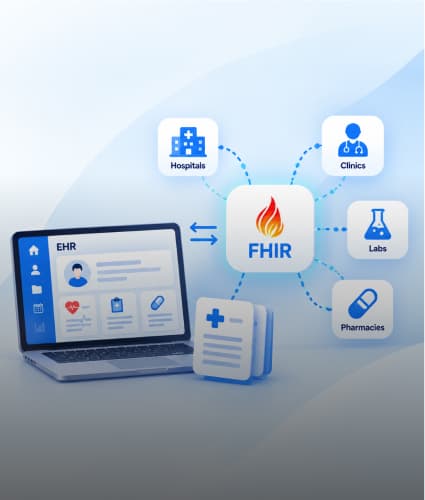
Interoperability as a baseline, not a bonus: FHIR and HL7 support is increasingly a requirement from day one, not a phase-two feature, as providers refuse to accept another data silo.
Voice-first interfaces: Particularly useful for older patient populations who find typing into an app more friction than talking to it.
Predictive analytics for risk stratification: flagging which patients are likely to disengage or deteriorate before it happens, not after.
How Zignuts Approaches Patient Engagement Projects
We're a software development agency with teams across India, Germany, and the US, and healthcare is one of the industries we build for most often, alongside our work in AI/ML development and connected health platforms like our fitness app development services.
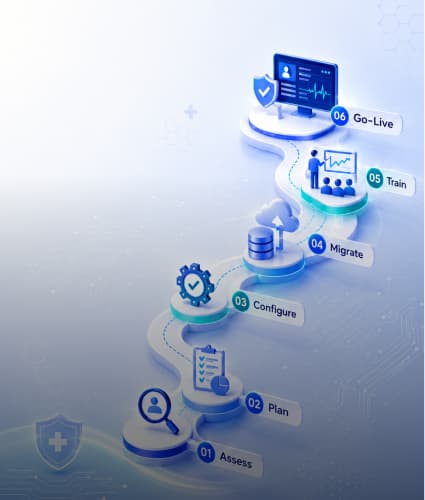
Our process for a patient engagement build typically looks like this:
Discovery call: we learn your specific care model, patient population, and existing systems (EHR, billing, scheduling) we'll need to integrate with.
Requirements & roadmap: we define the MVP feature set and a realistic delivery timeline, sprint by sprint.
Build: a dedicated team works in agile sprints, with HIPAA/GDPR compliance and security baked in from the architecture stage, not bolted on at the end.
Test & launch: QA against real clinical workflows, not just generic test cases.
Iterate: we use early patient and staff feedback to prioritize the next round of features.
If you already have an internal team and just need to scale capacity, we also offer staff augmentation, so you can plug AI-ready developers directly into your existing workflow instead of building a whole new vendor relationship.
Ready to Build Yours?

Build vs. Buy: What to Consider First
Before committing to a custom build, it's worth checking:
Does an off-the-shelf platform cover 80% of what you need? If yes, custom development may not be worth the cost yet.
How well does it integrate with your existing EHR and billing systems? Poor integration kills adoption faster than any missing feature.
Is it genuinely simple for patients to use? The best feature set in the world doesn't matter if patients find it confusing.
Is it HIPAA-compliant by design? Don't treat compliance as a checkbox you add later; it shapes the entire architecture.

Milap Paneri
A detail-oriented tech consultant specializing in building smart, reliable solutions. Combines strategic insight with technical knowledge to deliver high-impact results across projects.